By taking decisive steps to secure a sustainable future, Bamanwas Kankar panchayat in Rajasthan has become the first village body in the State to be certified as fully organic.
The panchayat, comprising seven hamlets in the newly formed Kotputli-Behror district, took measures not only to resolve issues of soil degradation and declining groundwater level but also to address health concerns linked to chemical-based farming.
All farming activities in Bamanwas Kankar are free of chemical pesticides and synthetic fertilizers while animal husbandry practices follow ecological and health-conscious standards. “This integrated approach has ensured that agriculture, livestock management, and environmental protection will move forward together,” sarpanch Ganesh Jat said.
The move towards organic farming was initiated through collective discussions among villagers in the past year. Farmers had begun noticing declining soil fertility, rising input costs, and health issues associated with prolonged exposure to chemical inputs. Mr. Jat said these concerns gradually shifted the community’s mindset from focusing on short-term yields to achieving long-term sustainability. Organic farming practices include crop rotation and mulching while agricultural inputs are mainly vermicompost, organic soil conditioners, and traps for pest control.
The transition to organic farming was supported by Cofarmin Federation of Organic Societies and Producer Companies (COFED), a group working in the areas of natural resource conservation, sustainable farming, and women’s empowerment. COFED provided technical guidance and institutional support, helping farmers understand organic practices, certification processes, and access to markets. Organic practices are expected to restore soil health, improve moisture retention, and protect groundwater from chemical contamination.
Farmers have begun observing increased biodiversity, including beneficial insects and soil microorganisms. The certification has opened access to premium markets and reduced dependence on costly chemical inputs. For livestock owners, organic practices have led to better animal health and safer dairy products, enhancing their market value.
Mukesh Gujjar of Nangalhedi village said chemical-free farming has given villagers “safe food and a healthier lifestyle”. “By choosing organic methods, we have moved towards a farmer-friendly model of agriculture,” he said.
Mahaveer Bokan of Bhadana Ki Bhaal village said stopping the use of chemical pesticides improved soil health, crop quality, and overall well-being of rural families. “Organic farming is the foundation for a healthy future,” he said.
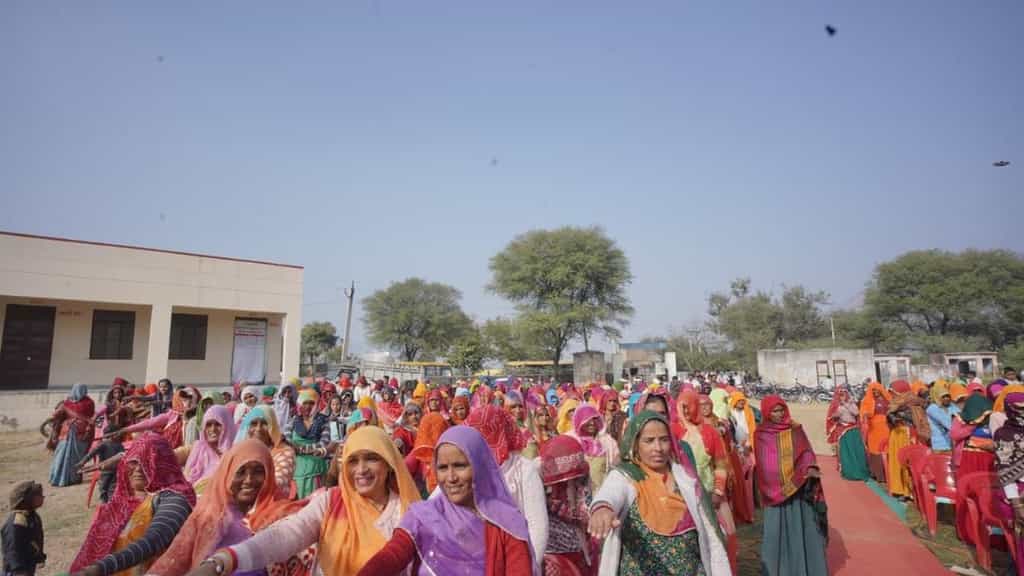
To formally mark the milestone, the panchayat organised a ceremony to take a pledge against chemical-based agriculture and animal husbandry on January 2. The event brought together farmers, cattle owners, local leaders, and COFED representatives.
The participants publicly took an oath to practise pesticide-free farming, organic cattle rearing, and environmentally-responsible land management. COFED founder Jeetendra Sevawat said the panchayat’s achievement was a community-driven movement rather than a bureaucratic exercise. He said the Bamanwas Kankar experiment demonstrated how sustainable agriculture becomes achievable when communities take ownership of change. “By this year-end, we aim to convert 300 panchayats across the districts of Bikaner, Alwar, Kotputli–Behror, and Bhilwara into fully organic village bodies,” he said.
The seven hamlets in the panchayat are Bamanwas, Nangalhedi, Rah Ka Mala, Bhadana Ki Bhaal, Tolawas, Khariya Ki Dhani, and Bairawas. COFED has collated the data of farms and cattle from these places and issuance of certificates for crops and livestock for the first cycle is in progress.
As policymakers search for techniques of sustainable agriculture, Bamanwas Kankar seems to have offered a model rooted in community participation, ecological responsibility, and collective vision.
The panchayat’s transformation has indicated that meaningful change often begins at the grassroots.
Editorial Context & Insight
Original analysis and synthesis with multi-source verification
Methodology
This article includes original analysis and synthesis from our editorial team, cross-referenced with multiple primary sources to ensure depth, accuracy, and balanced perspective. All claims are fact-checked and verified before publication.
Editorial Team
Senior Editor
James Chen
Specializes in India coverage
Quality Assurance
Copy Chief
Fact-checking and editorial standards compliance