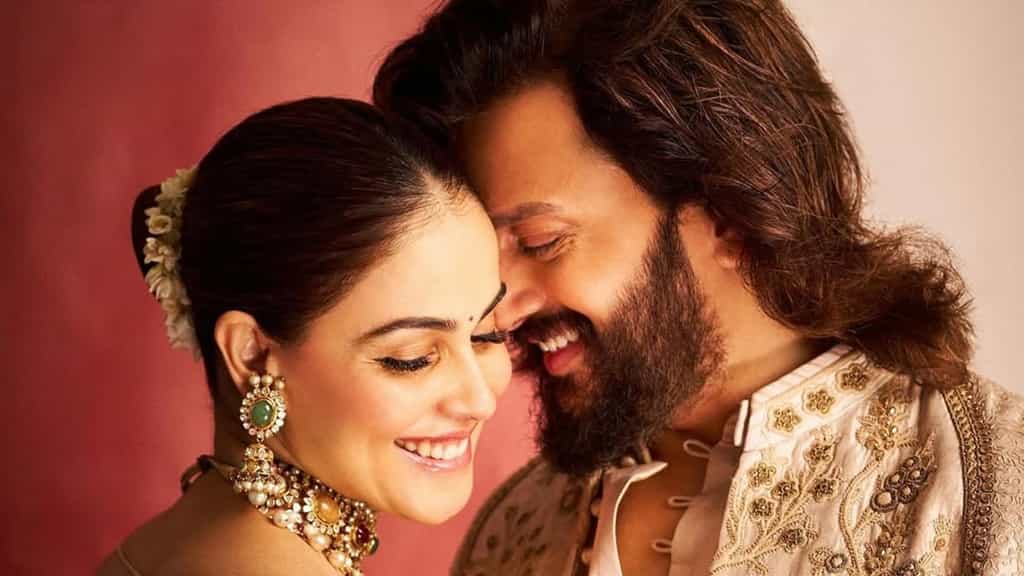
Actor Genelia Deshmukh recently spoke about her shift away from meat in a conversation with Soha Ali Khan on her YouTube channel, describing how unfamiliar vegetarianism initially felt to her because she “was born in a non-vegetarian family.” Reflecting on her early understanding of vegetarian food, she admitted, “I didn’t know any better. I was born in a non-vegetarian family. I only knew peas, potatoes and paneer as vegetarian food.”
Genelia shared that she gave up meat in 2017, though the transition did not immediately make her vegan. “I gave up meat in 2017, that was the time I turned vegetarian and not plant-based. I still used to have a little bit of dairy and cheese, and eggs were on,” she said.
She added that while people often associate such changes with spirituality, her initial motivation was far more personal: “People say that you reach a spiritual place, and that is what happened with me initially. My first step toward being vegan was selfish as I thought this kind of living would be better for my health.”
As she gradually reduced her animal product intake, Genelia spoke about experiencing both physical and emotional shifts. “On the way to becoming a vegan, I realised it is connected to a zillion things. One of the things was having babies; I didn’t want anything to hurt them, and I am an animal lover, but I used to enjoy my meat as well,” she said. “When you start limiting its consumption, you realise there is a possibility to enjoy other things, which is what happened with me.”
She also described changes in how her body felt after meals: “I started learning more about eating vegetarian food, and I felt extremely light after a meal. I was more disciplined cause I wanted this approach in life.”
The shift to a fully vegan diet, however, came later, during the pandemic. Genelia explained, “It started with Riteish, he left meat in 2016, saying, ‘It doesn’t feel right anymore’. I took 2 months, and on January 1st, 2017. I gave it up, but we would eat eggs and animal products.”
When COVID hit, the couple reassessed their eating habits more closely. “Everyone was scared, and Riteish mentioned, ‘Why don’t we try to get off all animal products altogether?’ I said ‘Okay, we are home, let’s try to make that shift.’”
She noted how even small amounts of dairy began to feel different to her body. “Riteish started feeling amazing. Every time we had a little milk or butter on our roti, we felt full. Living life a certain way, you never realise the things you are eating every day and how they affect your body.”
Kanikka Malhotra, consultant dietitian and diabetes educator, tells indianexpress.com, “Individuals from non-vegetarian backgrounds often overlook protein diversity, B12, iron, omega-3s, and calcium when shifting to a vegetarian/vegan diet, risking fatigue or deficiencies. Counter this by prioritising diverse plants like lentils, quinoa, tofu, nuts, seeds, fortified foods, and algae oil supplementation; track initially, not obsessively. Pair iron-rich spinach with vitamin C from citrus for absorption — simple swaps prevent overwhelm while building habits.”
According to Malhotra, reducing animal products lightens digestion by increasing fibre (25-40g/day from plants), speeding gut transit, and easing bloating, unlike dense animal fats, which slow motility.
“Plant proteins trigger peptide hormones for prolonged satiety; Genelia’s fullness from milk/butter reflects dairy’s casein curds taxing lactase-deficient guts, which is common in Indians. Blood sugar stabilises heme iron overload, fostering lightness,” she notes.
DISCLAIMER: This article is based on information from the public domain and/or the experts we spoke to. Always consult your health practitioner before starting any routine.
Editorial Context & Insight
Original analysis and synthesis with multi-source verification
Methodology
This article includes original analysis and synthesis from our editorial team, cross-referenced with multiple primary sources to ensure depth, accuracy, and balanced perspective. All claims are fact-checked and verified before publication.
Primary Source
Verified Source
The Indian Express
Editorial Team
Senior Editor
James Chen
Specializes in India coverage
Quality Assurance
Copy Chief
Fact-checking and editorial standards compliance