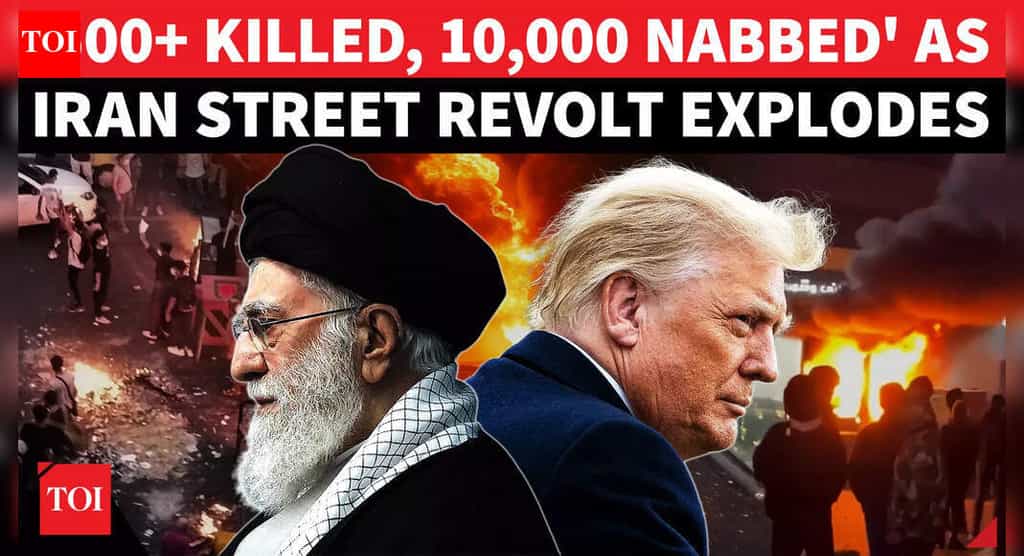
Iranian authorities have launched one of the deadliest crackdowns on unrest in more than a decade, which has seen about 2000 deaths, according to videos, eyewitness accounts and medical testimony emerging despite a near-total communications blackout.
The New York Times citing witnesses and hospital workers said that security forces have opened fire on largely unarmed protesters, at times using automatic weapons and shooting indiscriminately. Medical staff said the nature of injuries has escalated sharply, from pellet wounds to gunshot injuries and skull fractures.
“This was a mass-casualty situation,” a doctor treating protesters said in testimony released by the Center for Human Rights in Iran.
“Our facilities, space and personnel were far below the number of injured people arriving. The trauma cases I saw were brutal, shoot to kill.”Iranian authorities have shut down internet services, international phone lines and, in some areas, domestic mobile connections for several days, making independent verification difficult. However, videos that have surfaced show rows of body bags in morgues and grieving families gathered around bloodied corpses.
In footage aired on Iranian state television, a morgue official standing among body bags said, “The majority of these people are ordinary people. Their families are just ordinary families,” as quoted by NYT.Human rights groups say hundreds have already been killed, though they are struggling to confirm figures amid the blackout. A senior Iranian Health Ministry official, speaking on condition of anonymity, told the newspaper that about 3,000 people had been killed nationwide, including hundreds of security personnel, while blaming “terrorists” for the violence.
Another government official said he had seen an internal report citing at least 3,000 deaths and warned the toll could rise. If confirmed, the figure would place the current violence among the worst episodes of state repression in Iran’s recent history.Eyewitnesses described snipers positioned on rooftops in parts of Tehran, firing into crowds, and peaceful demonstrations turning suddenly chaotic as gunfire erupted. One nurse at Nikan Hospital in northern Tehran said 19 gunshot victims arrived within a single hour, overwhelming staff. A doctor at Shohada Hospital said many protesters were declared dead on arrival, with close-range gunshot wounds to the head, neck, lungs and heart. “The regime is on a killing spree,” said a protester identified as Yasi, who asked that her full name be withheld for safety.Protests initially erupted late last month over Iran’s worsening economic conditions, including sharp currency devaluation.
While officials initially acknowledged public grievances, demonstrations rapidly expanded from marketplaces and universities into large-scale protests across cities and rural areas.Iranian leaders have since shifted their narrative, accusing armed groups and foreign enemies of orchestrating the unrest. “Take firm and effective measures to avenge the martyrs and those killed,” Iran’s attorney general Gholam-Hossein Mohseni-Ejei said at a meeting of the supreme judicial council, according to the semi-official Tasnim news agency. Rights groups have also raised concerns about hospitals being monitored by security forces. Hadi Ghaemi, executive director of the Center for Human Rights in Iran, said his organisation had received reports that wounded protesters were being detained in medical facilities.“They take the injured protesters to the hospital and if they recover, they arrest them,” said Saeed, a Tehran-based businessperson who spoke to The New York Times using a satellite internet connection. “If the families arrive, they try to somehow help them escape.”Despite the severity of the crackdown, Saeed said the violence had not deterred protesters. “People are not afraid anymore,” he said.
Editorial Context & Insight
Original analysis and synthesis with multi-source verification
Methodology
This article includes original analysis and synthesis from our editorial team, cross-referenced with multiple primary sources to ensure depth, accuracy, and balanced perspective. All claims are fact-checked and verified before publication.
Primary Source
Verified Source
Times of India
Editorial Team
Senior Editor
Shiv Shakti Mishra
Specializes in India coverage
Quality Assurance
Associate Editor
Fact-checking and editorial standards compliance