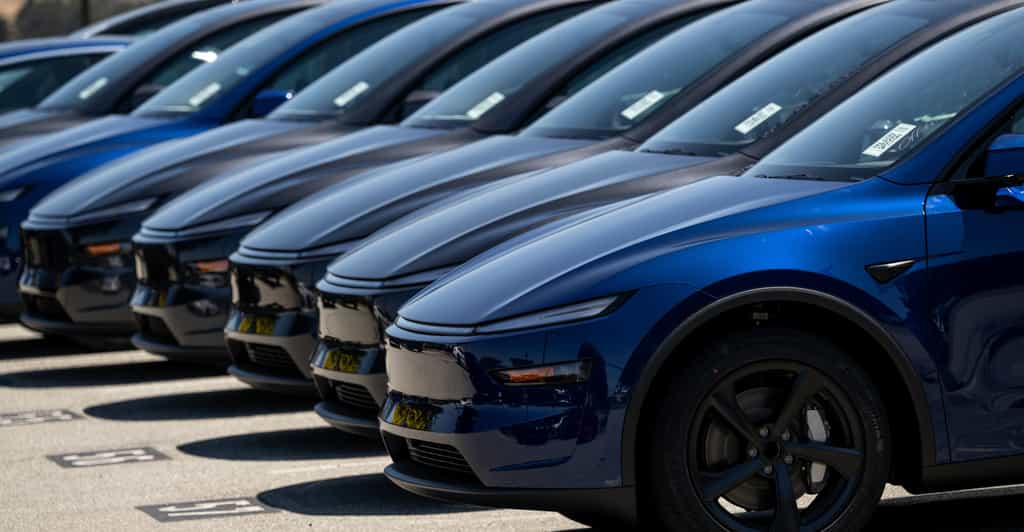
As its sales continue to slip and its robotaxi strategy seems to falter, Tesla CEO Elon Musk said today that the company would stop selling its Full Self-Driving feature as a standalone package. Instead, starting on February 14th, the Level 2 driver assist system would be offered as a monthly subscription only.
The news marks a massive shift in how Tesla markets FSD, a software system that Musk has long claimed would lead to fully autonomous vehicles and thus would be an “appreciating asset.” At one time, FSD was sold for $15,000 as a one-time option. That price has since fallen to $8,000, or as a $99-a-month subscription.
Musk didn’t offer any rational for the move, which comes about two weeks before Tesla is expected to announce its fourth quarter and full-year 2025 earnings. The company’s Q4 delivery report revealed a year over year sales drop of 15.6 percent. Growing FSD’ subscription base was a key condition of Musk’s recently approved pay package: he will need to add 10 million active subscribers in order to receive compensation that could be worth $1 trillion.
In the early years, Musk urged Tesla customers to buy the FSD package while they can, because as the software improved the price would assuredly go up. He promised that eventually FSD would get so good Tesla owners would be able to earn passive income on their vehicles as part of a fully autonomous robotaxi service. Musk was right about the price, but only briefly: the cost of FSD peaked in 2022 when it was raised to $15,000, but later fell to $12,000, and eventually $8,000.
And the robotaxis? Well, that’s a work in progress. Last year, Musk predicted that 50 percent of the US population will have access to Tesla’s robotaxis by the end of 2025. So far, only a handful of company-owned vehicles are available in Austin and San Francisco to a limited number of customers. Those vehicles feature safety drivers in the driver or passenger seats, with access to a kill switch if anything goes wrong — a fallback that Waymo’s robotaxis don’t have.
Tesla hasn’t said how many customers currently subscribe to FSD. Older Tesla vehicles with less capable computers will need to be retrofitted to take advantage of FSD’s current capabilities, a process that Musk acknowledged will be costly and “painful.”
Tesla has also come under fire for the way it markets FSD. California’s Department of Motor Vehicles recently ruled that the company is misleading customers and violating state law by selling the system as “Full Self-Driving” when drivers are required to supervise the system.
Follow topics and authors from this story to see more like this in your personalized homepage feed and to receive email updates.
Editorial Context & Insight
Original analysis and synthesis with multi-source verification
Methodology
This article includes original analysis and synthesis from our editorial team, cross-referenced with multiple primary sources to ensure depth, accuracy, and balanced perspective. All claims are fact-checked and verified before publication.
Primary Source
Verified Source
The Verge
Editorial Team
Senior Editor
Shiv Shakti Mishra
Specializes in Technology coverage
Quality Assurance
Copy Chief
Fact-checking and editorial standards compliance