Projects with hardware in the water stopped due to Department of Defense fears.
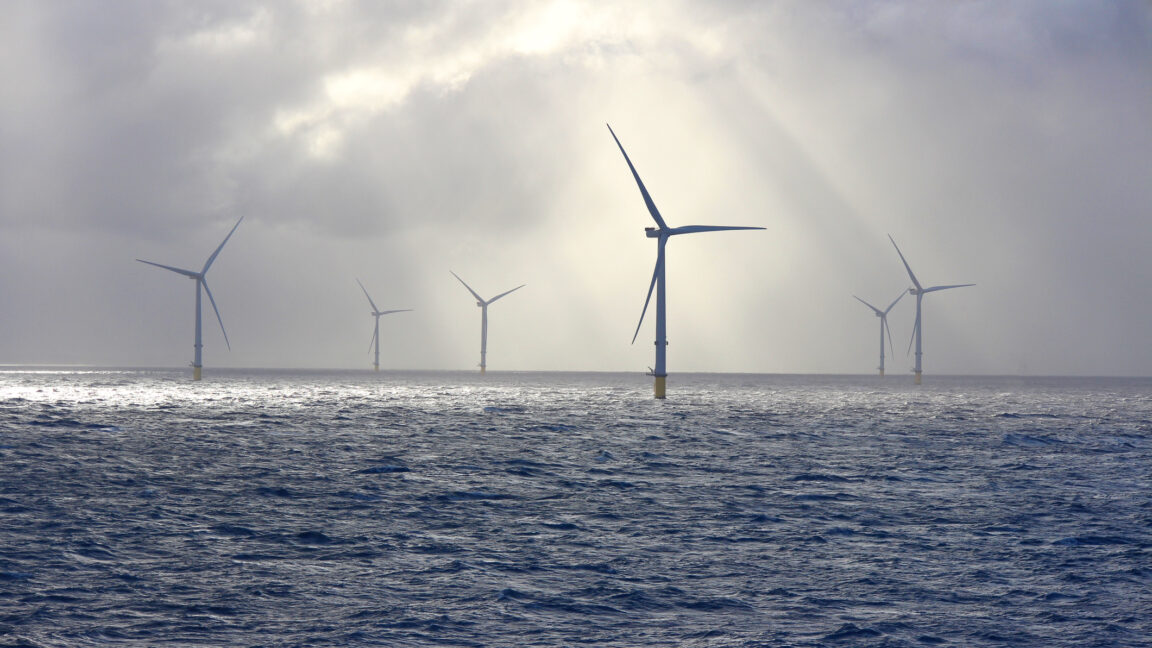
On Monday, the US Department of the Interior announced that it was pausing the leases on all five offshore wind sites currently under construction in the US. The move comes despite the fact that these projects already have installed significant hardware in the water and on land; one of them is nearly complete. In what appears to be an attempt to avoid legal scrutiny, the Interior is blaming the decisions on a classified report from the Department of Defense.
The second Trump administration announced its animosity toward offshore wind power literally on day one, issuing an executive order on inauguration day that called for a temporary halt to issuing permits for new projects pending a re-evaluation. Earlier this month, however, a judge vacated that executive order, noting that the government has shown no indication that it was even attempting to start the re-evaluation it said was needed.
But a number of projects have gone through the entire permitting process, and construction has started. Before today, the administration had attempted to stop these in an erratic, halting manner. Empire Wind, an 800 MW farm being built off New York, was stopped by the Department of the Interior, which alleged that it had been rushed through permitting. That hold was lifted following lobbying and negotiations by New York and the project developer Orsted, and the Department of the Interior never revealed why it changed its mind. When the Interior Department blocked a second Orsted project, Revolution Wind offshore of southern New England, the company took the government to court and won a ruling that let it continue construction.
Today’s announcement targets those and three other projects. Interior says it is pausing the permits for all five, which are the only projects currently under construction. It claims that offshore wind creates “national security risks” that were revealed in a recent analysis performed by the Department of Defense, which apparently neglected to identify these issues during the evaluations it did while the projects were first permitted.
What are these risks? The Interior Department is being extremely coy. It notes that offshore wind turbines can interfere with radar sensing, but that’s been known for a while. In announcing the decision, Interior Secretary Doug Burgum also noted “the rapid evolution of the relevant adversary technologies.” But the announcement says that the Defense Department analysis is classified, meaning nobody is likely to know what the actual reason is—presuming one exists. The classification will also make it far more challenging to contest this decision in court.
Many of the affected states were counting on the power that these facilities would deliver, and will likely oppose this move. “This appears to be a second, even more lawless and erratic stop work order, reviving the Trump Administration’s prior failed attempt to halt construction of Revolution Wind,” said William Tong, the Attorney General of Connecticut. “There is a court order blocking their prior stop work order and this appears to be a new brazen attempt to circumvent that order.” He indicated his office is currently evaluating its legal options.
The states are likely to be joined by the companies backing these projects, which, in several cases, have already spent nearly all the money needed for their construction and will be eager to start earning that back by selling power from the facilities.
In both court cases in which the administration attempted to block wind power development, the government lost badly. The records in the case indicate that it has had no substantive reasons for reversing decades-old policies and overruling past decisions, and that internally, the decision-making process appears to consist entirely of noting that the president doesn’t like wind power. It’s unclear whether this classified evaluation differs significantly from earlier efforts in any way other than that it will be harder to find out.