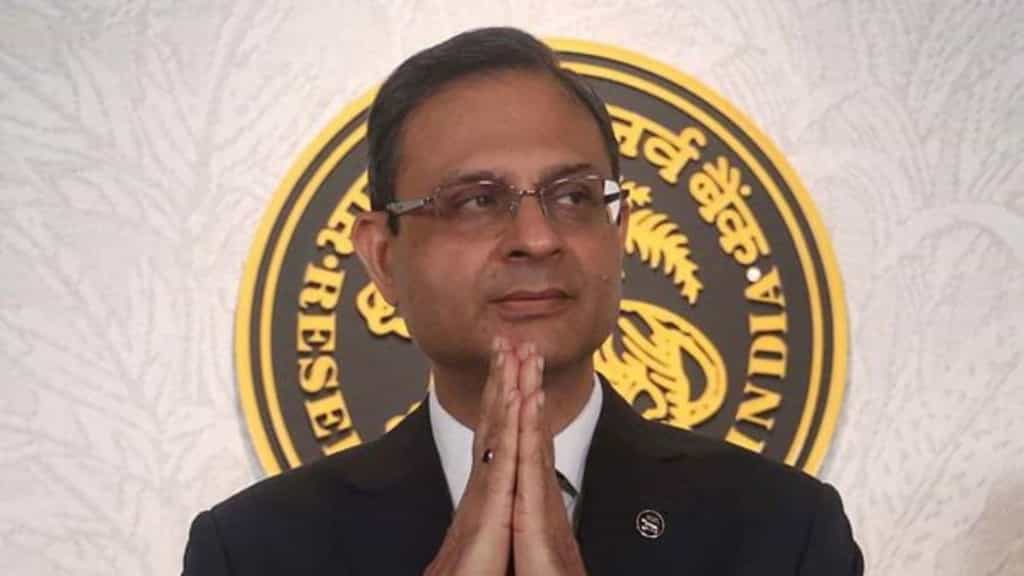
“The purpose of enforcement actions undertaken by the Reserve Bank is generally not punitive. The intent is largely to correct,” he said. (File Photo)
Reserve Bank of India (RBI) Governor Sanjay Malhotra on Friday called on all regulated entities to work together in developing analytics and tools to proactively prevent the rising incidences of digital fraud.
“While banks and other regulated entities individually should continue to improve their tools, techniques and processes in preventing and tackling digital frauds, this is an area where we need to collaborate with each other to build analytics and tools to detect mule accounts and suspicious transactions timely and pre-emptively,” Malhotra said during his address at the third annual Global Conference of the College of Supervisors.
Mule accounts are commonly used by fraudsters to channel proceeds of frauds. The Reserve Bank Innovation Hub (RBIH) — a subsidiary of RBI — has developed an artificial intelligence (AI)/machine learning (ML)-based model called MuleHunter.AI to detect and flag mule accounts in near real-time.
Malhotra said digital channels help in improving financial inclusion and convenience, but without guardrails. They can also facilitate opaque pricing, weak disclosures and inappropriate recovery practices.
“The aim should be to ensure that digitalisation and innovations are aligned with fair outcomes for consumers, and a key element of this endeavour should be to protect customers from the menace of rising digital frauds,” he said.
“For all of us, protecting customers’ interest is not just a priority — it has to become the cornerstone of a sustainable and resilient financial system,” Malhotra said.
He added that the RBI’s supervisory action and enforcement actions, often viewed as the most visible aspect of regulation and supervision, should be seen as part of a continuum of supervisory tools, and not as a standalone response.
These actions, Malhotra said, serve two purposes — signal to those against whom such measures have been initiated, and make others aware of our acceptable standards of conduct and expectations.
The recent Financial Stability Report (FSR) showed that during June-November 2025, the RBI undertook enforcement action against 134 regulated entities (one public sector bank, four private lenders, one payments bank, one foreign bank, one regional rural bank (RRB), 113 co-operative banks, seven NBFCs, one payment system operators, and five housing finance companies) and imposed an aggregate penalty of Rs 6.99 crore for non-compliance with/contravention of statutory provisions and/or directions issued.
Editorial Context & Insight
Original analysis & verification
Methodology
This article includes original analysis and synthesis from our editorial team, cross-referenced with primary sources to ensure depth and accuracy.
Primary Source
The Indian Express