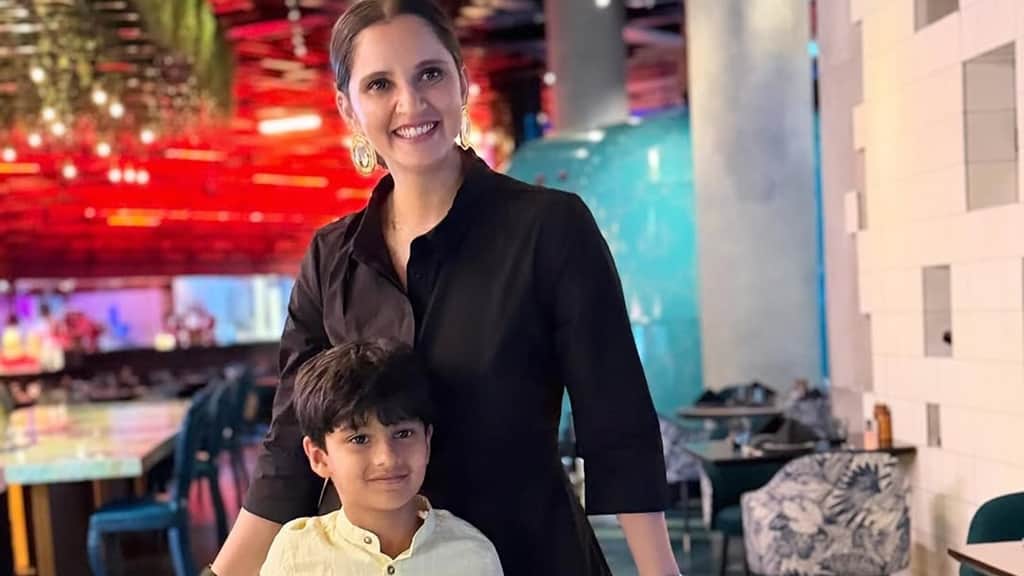
Sania Mirza on teaching her child how to handle losing (Source: Instagram/@mirzasaniar)
Sania Mirza doesn’t do easy wins, even if it’s against her son! In conversation with football legend Sunil Chhetri on her podcast Serving It Up With Sania, the tennis ace revealed how she is extremely competitive with her child when playing sports. “I don’t let him win,” she shared, adding: “He legit beats me at football because he is that good. I have two left feet, if that’s possible as a tennis player, But I do.” Mirza further mentioned that she plays a variety of sports with her son, from padel to tennis, and praised his hand-eye coordination. In fact, she also pointed out that her kid is so smart, he likes to team up with her in order to win.
When Chhetri asked if he gets angry when Mirza beats him at a game, she replied, “Very. He gets very upset. I have to tone it down and tell him, ‘It’s okay if you lose’.”
Learning to handle loss is a crucial part of a child’s emotional development, and a psychologist weighed in on the importance of letting a child face loss early in life.
Clinical psychologist and founder of Sentier Wellness, Dr Rimpa Sarkar, said that when children lose in safe, supportive environments like playing sports or games with parents, they learn resilience, frustration tolerance, emotional regulation, and perseverance. Winning all the time may boost short-term confidence, but it often deprives children of the opportunity to learn how to cope with disappointment, which is inevitable in real life.
“When parents don’t let their child win at activities they are skilled at, they’re modelling realism and effort-based growth rather than entitlement,” she told indianexpress.com.
Sania Mirza and her seven year old son. (Source: Instagram/@mirzasaniar)
Dr Sarkar believes this approach works only when it’s free of humiliation or pressure. “Parents should never mock, compare, or dismiss a child’s feelings after a loss. At the same time, allowing children to genuinely win in areas where they are developing strength is equally important it reinforces competence, motivation, and self-belief,” she noted.
Experiencing small failures early helps children manage bigger setbacks later whether it’s academic disappointment, rejection, or career challenges. After a loss, children may feel anger, sadness, or embarrassment. According to Sarkar, parents play a key role in helping them name these emotions, normalise them, and redirect focus toward effort, learning, and improvement rather than outcome alone.
What often causes harm is not losing, but how adults react to it. Dr Sarkar added that overprotecting children from loss can make them fragile, while harsh reactions can make failure feel shameful. According to her, the healthiest balance lies in encouragement paired with honesty. “Parents who say, ‘It’s okay to feel upset, what can we learn from this?’ help children develop resilience, self-awareness, and emotional maturity,” she concluded.
Ultimately, children who are guided — not shielded — through loss, grow into adults who can face failure without losing self-worth.
DISCLAIMER: This article is based on information from the public domain and/or the experts we spoke to.
Editorial Context & Insight
Original analysis & verification
Methodology
This article includes original analysis and synthesis from our editorial team, cross-referenced with primary sources to ensure depth and accuracy.
Primary Source
The Indian Express