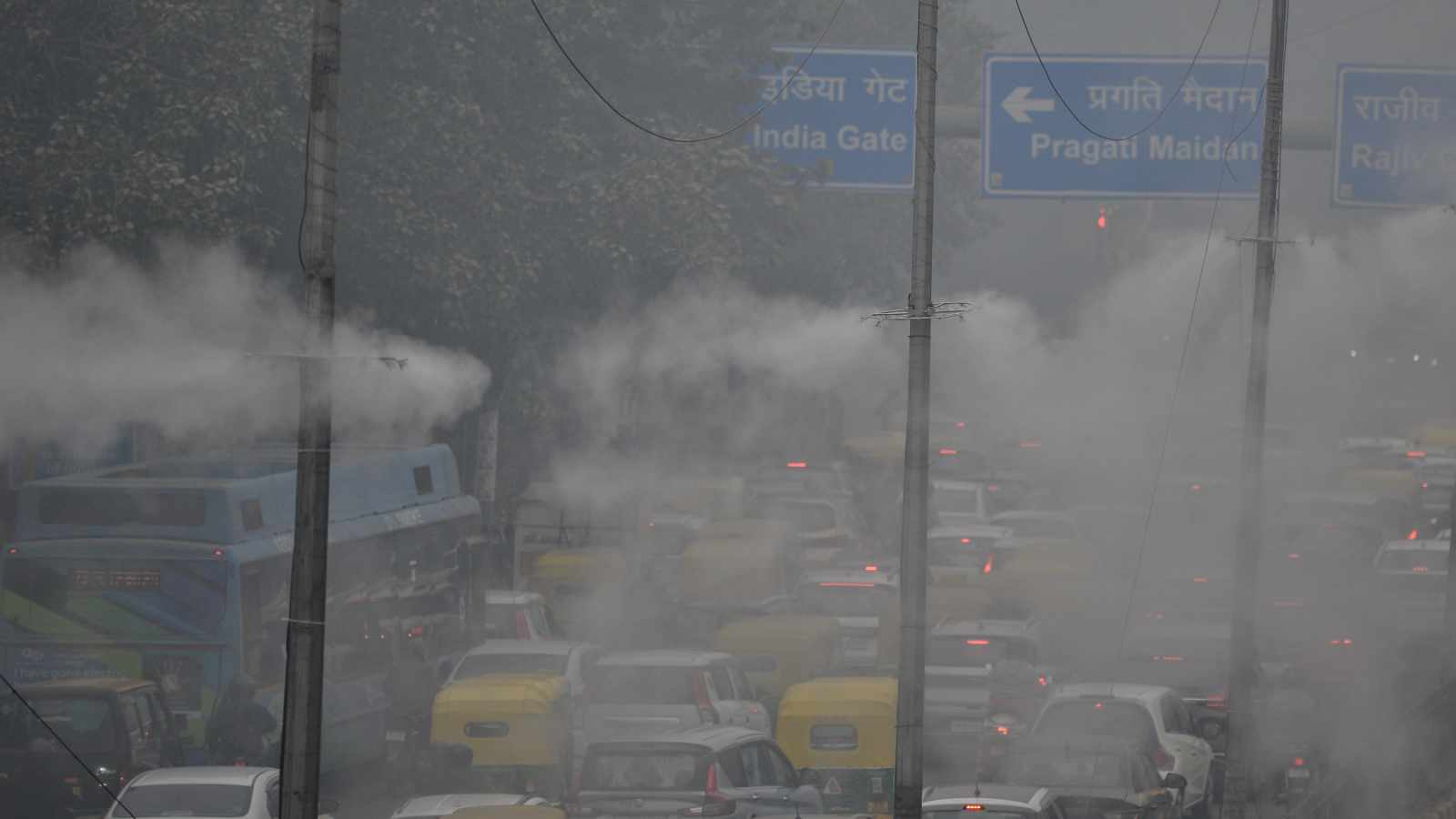
A pole-mounted mist spray system operates to mitigate pollution as air quality in the city remains very poor, in New Delhi on Saturday. (ANI Photo)
Setting up a Rohini Dust Action Cell for coordination among civic agencies; weekly joint inspections by the Delhi Pollution Control Committee, Delhi Development Authority, Municipal Corporation of Delhi and the traffic police; a time-bound dust-suppression mandate through daily mechanised sweeping and regular sprinkling of water or approved dust suppressants — these are among the remedial measures in focus after Rohini MLA Vijender Gupta on Saturday issued directions to fight dust pollution in his constituency, which is aggravating the air quality.
The visit follows a report by The Indian Express on December 19, which flagged that North West Delhi’s Rohini continues to grapple with dust pollution even as flying squads of the Commission for Air Quality Management (CAQM) had raised concern over high visible dust on 12 of 57 roads in the area during an inspection earlier this month. During a spot check, The Indian Express had found roads dug up, untarred or covered with loose soil in the area more than 10 days after the CAQM inspection on December 8.
Amid the fight against air pollution in the Capital, CM Rekha Gupta has identified the elimination of dust pollution as one of the government’s top priorities. Road dust is the second highest contributor to Delhi’s PM2.5 pollution, accounting for close to one-fifth (18%) of the fine and deadly particulate matter, according to a 2018 source-apportionment study by The Energy and Resources Institute (TERI) and Automotive Research Association of India. The study identified transport as the biggest contributor (39%). According to latest government data, these two still continue to be among the top contributors to air pollution in the city.
On Saturday, Gupta, who is also the Delhi Assembly Speaker, also suggested interim solutions wherever full-scale work cannot resume due to regulatory restrictions. He said exposed road stretches must be temporarily paved or compacted to prevent dust generation. School zones and market areas should be in focus during peak hours, the BJP leader said. The weekly joint inspections, he said, will be supported by geo-tagged reporting and compliance timelines.
According to the Rohini MLA, “the absence of a unified maintenance and enforcement mechanism has led to prolonged neglect of exposed road surfaces and that such fragmentation must be corrected through structured inter-agency coordination and monitoring”. To address this gap, Rohini Dust Action Cell will be set up under the MLA’s office to ensure coordination among civic agencies.
For long-term mitigation, Gupta said, there is a need to complete wall-to-wall paving or carpeting of remaining untarred or frequently damaged roads in Rohini, construction of permanent shoulders and footpaths, conversion of vacant open plots into green buffers or paved community spaces, and deployment of local particulate matter monitoring points near schools and high-traffic junctions.
While taking a stock of the situation at Madhuban Chowk in Rohini’s Sector-8, which was one of the hotspots highlighted in The Indian Express report, Gupta said that air pollution caused by road dust and unfinished civic works “is not an inescapable reality but a preventable governance challenge, one that calls for time-bound action, coordinated administration and firm accountability”.
According to the findings reviewed during the inspection, vehicular movement on these exposed stretches repeatedly suspends dust into the air. “The situation has been worsened by the suspension of infrastructure works, including drainage-related projects under pollution-control measures, leaving road surfaces untreated for extended periods. Residents have reported sustained exposure to dust for several months, raising serious public health concerns,” a statement from Gupta’s office underlined.