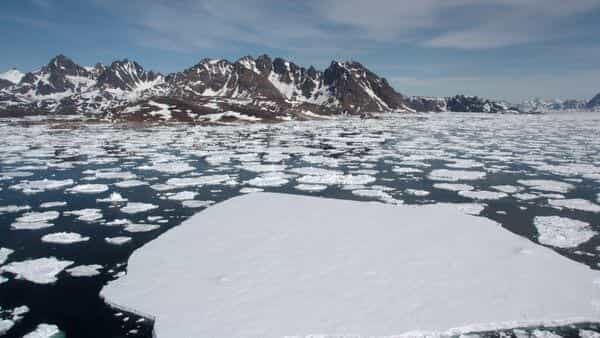
Greenland is back in the spotlight for US President Donald Trump. Following his recent actions in Venezuela, Trump warned on Friday that the US must "do something" about Greenland. He claimed that if the US does not act, Russia or China might seize the strategic Arctic island.
In response, envoys from Denmark and Greenland have launched an urgent push in Washington. They are meeting with lawmakers and officials to block Trump’s call for a “takeover” of the territory.
Greenland has been under Danish control for about 300 years, despite being nearly 3,000 km (1,860 miles) away. Denmark's relationship with Greenland dates back to the colonial period.
After the monarchy of Denmark and Norway fell apart in 1814, Greenland remained under Danish rule. In 1916, the United States recognised Denmark’s rights over Greenland as part of an agreement that also supported the US purchase of the Danish West Indies, according to a report by the Danish Institute of International Studies.
The issue over a Norwegian claim to sections of Greenland was settled in 1933 when the Permanent Court of International Justice, established by the League of Nations, decided against Norway.
Following World War II, the United Nations advocated for decolonisation in Greenland. In 1953, Greenland, previously a colony, became part of Denmark and received two seats in the Danish Parliament.
Greenland obtained Home Rule in 1979, which led to the creation of the Greenlandic Parliament. In 2009, it gained self-rule via legislation that outlined a ‘blueprint’ for independence. This law made it clear that the choice to pursue independence from Denmark is now up to the Greenlandic people, the report said.
Most Greenlanders are likely to choose this option eventually, the report said, citing polls. Independence is also accepted in Denmark. However, concerns remain over the fall of the Greenlandic welfare state.
Due to Greenland's topography, small population, and other factors, the Greenlandic government remains reliant on an annual block grant from Denmark of approximately $600 million, as well as Danish support for services such as defence, the coast guard, and law enforcement.
Hence, the independence of Greenland depends on continued assistance after independence, something the Greenlandic government has yet to persuade Denmark to accept, the report noted.
Greenland, the world's largest island, is situated between North America and the Arctic, positioning it well for early warning systems against missile attacks and to keep a check on vessels in the region.
During the Cold War, the US considered placing nuclear missiles on the island but ultimately dropped the plan due to engineering challenges and Danish opposition.
Pituffik Space Base, previously called Thule Air Base, has been operated by the US since World War II and now primarily monitors for missile activity, according to a report by the BBC.
Recently, there has been increasing interest in Greenland's natural resources, such as rare earth minerals, uranium, and iron mining. Scientists also believe the region may have substantial oil and gas reserves, it added.
With global warming, these resources may become more accessible as the massive ice sheet covering the island melts.
Valuable mineral resources have been a major focus of Trump in different parts of the world, including his interactions with Ukraine.
But, Trump claimed, “We need Greenland for national security, not minerals,” the report quoted him as saying.
He also said that “Greenland is covered with Russian and Chinese ships all over the place”. Several Republican lawmakers share the view that US security is threatened by these countries.
During his first presidential term, Trump proposed to buy the island in 2019, but was informed it was not for sale. He renewed his interest after returning to the White House in January 2025.
In March, US Vice-President JD Vance visited Greenland and accused Denmark of not investing sufficiently to safeguard the territory.
A new discussion about US intentions arose in late 2025 when Trump appointed Jeff Landry as a special envoy to Greenland, openly discussing the possibility of incorporating the island into the US.
Editorial Context & Insight
Original analysis and synthesis with multi-source verification
Methodology
This article includes original analysis and synthesis from our editorial team, cross-referenced with multiple primary sources to ensure depth, accuracy, and balanced perspective. All claims are fact-checked and verified before publication.
Primary Source
Verified Source
mint - news
Editorial Team
Senior Editor
Dr. Elena Rodriguez
Specializes in India coverage
Quality Assurance
Associate Editor
Fact-checking and editorial standards compliance