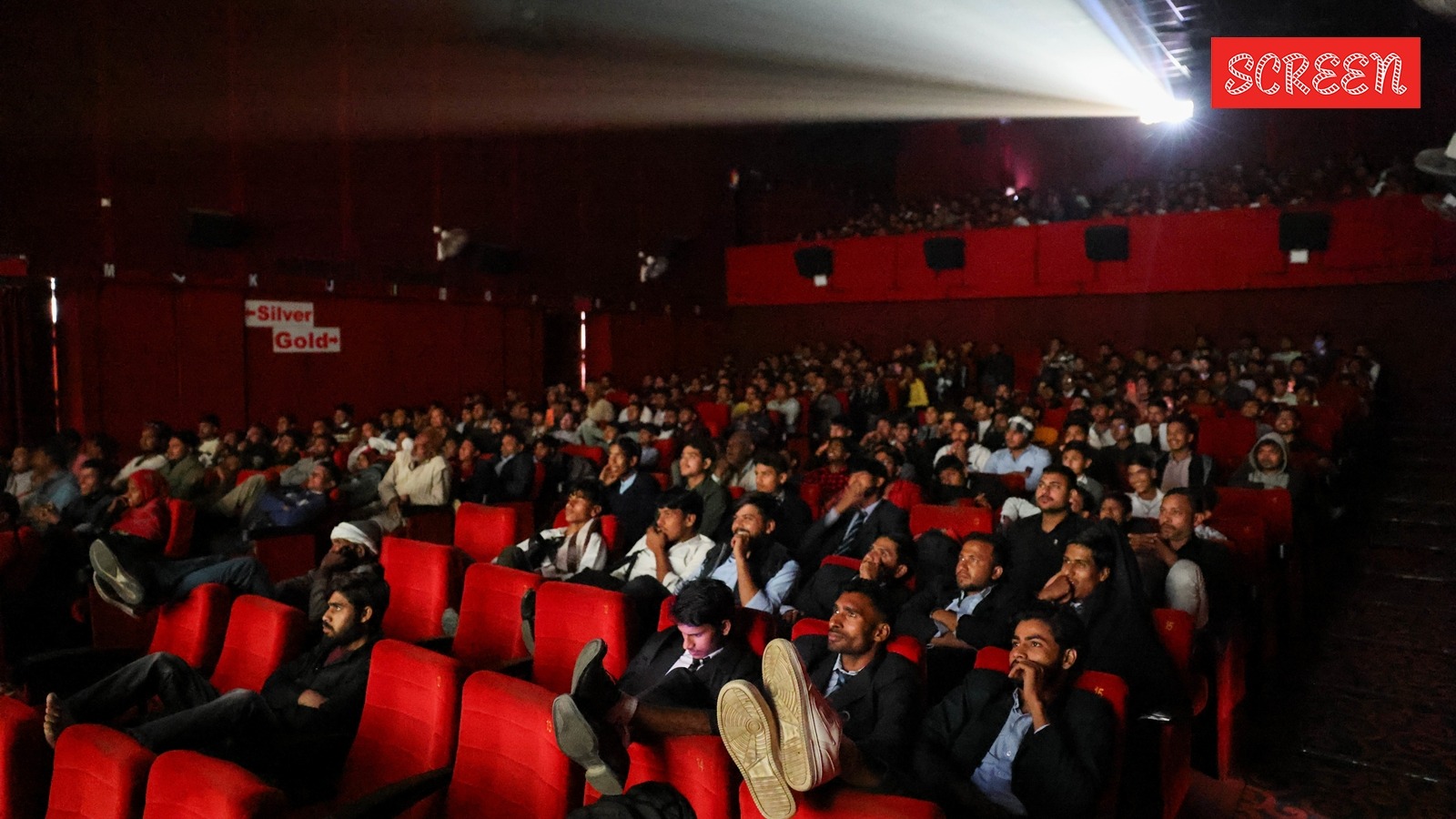
KFCC has revealed that only 10 per cent of the 184 Malayalam movies that hit the screens so far this year have been successes. (File Photo/Chitral Khambhati)
As 2025 draws to a close, Malayalam cinema has once again entered a reflective mode, analysing what went wrong this year and what it could improve in 2026. While every year ends on a tragic note, with stakeholders lamenting the deplorable number of box-office successes, the Kerala Film Chamber of Commerce (KFCC) has decided to take things one step further and confront the state government directly over alleged inaction on a few demands it has been raising for quite some time, particularly regarding double taxation on movie tickets, at a time when only about 10 per cent of the total movies released in a year are emerging as successful.
Announcing that it will stop distributing films to theatres run by the Kerala State Film Development Corporation Ltd (KSFDC), founded by the Government of Kerala, starting January 2026, the KFCC alleged during a press conference on Tuesday, December 23, that the government was ignoring the demands of cinema stakeholders. The Chamber’s demands include the provision of special electricity tariffs.
Speaking to SCREEN later, KFCC president Anil Thomas said, “Though we have been asking the government to eliminate double taxation and resolve a few other issues for a long time, no fruitful action has been taken thus far. Although Minister for Culture Saji Cheriyan had mentioned earlier that they would look into the matter and hold discussions following the Kerala Film Policy Conclave, nothing of that sort happened.” For the unversed, the conclave, organised by the state government to frame a policy for the Malayalam film industry, was held in Thiruvananthapuram in August of this year.
Anil added, “There are many things we have been demanding continuously. While the minister previously suggested calling a meeting to address them, that hasn’t happened so far. Hence, we decided not to wait indefinitely. If they are not cooperating, we will also move forward in a way that doesn’t cooperate with them. Government-run theatres are functioning because of the content we produce. But many other (private) theatres are on the verge of closing down.”
The incumbent head of the KFCC, which serves as the apex body of the Malayalam film industry — representing producers, distributors, and exhibitors — also maintained that all the organisations part of it have supported this decision. “It was a unanimous decision by all the outfits that are part of the chamber, including the producers’, distributors’, and exhibitors’ associations,” he added.
“Even after the introduction of the Goods and Services Tax (GST) in 2017, the entertainment tax was not subsumed into it. That’s being imposed on the film industry as double taxation, and the government is finding an easy way to raise funds through it. Cinema is already an ailing industry. We have been asking for help in various ways. Yet, not only are they not providing help, but they are also imposing such additional burdens. Apart from the usual ‘we’ll look into it,’ no consideration has been given so far by the government,” Anil Thomas alleged.
It may be mentioned here that double taxation on movie tickets is a system in which local bodies levy an entertainment tax in addition to GST. Anil Thomas said, “One should remember that even the cess levied for the Kerala Cultural Activists’ Welfare Fund Board exists because of the products a movie producer creates. So, shouldn’t they support the industry as well?” The said cess was introduced in 2013 to provide relief to cultural activists, promote their welfare, and pay pensions to those engaged in various forms of arts, literature, and cultural activities. The order issued then mentioned that the cess may be collected at a rate not exceeding Rs 3 per admission to cinemas where the ticket price exceeds Rs 25.
Anil also revealed that only 10 per cent of the 184 Malayalam movies that hit the screens so far this year have been successes. The KFCC president pointed out, “The number must be less than 20. Ten per cent means around 18 movies. While about 10 films may have run well, at most, only 10 per cent of movies released this year thus far became successful.” He added, “If they remove double taxation and implement relief measures, it would be helpful for the industry. But this government hasn’t done anything in these nine years.”
He also admitted that there has been a significant dip in the total number of movies produced. “The numbers are decreasing, and they will dip further next year. The main reason is that revenue is not being generated. Films have to recoup their costs solely from theatre revenue. OTT platforms are not purchasing movies as often. Revenue generation has become a high-risk area for cinema.”
When asked whether the organisations had begun taking steps to curb the skyrocketing remuneration of artistes and certain technicians — a topic that has been widely discussed for some time — Anil Thomas said that it is the producers’ association that is responsible for initiating discussions on the matter, and noted that it has yet to do so.