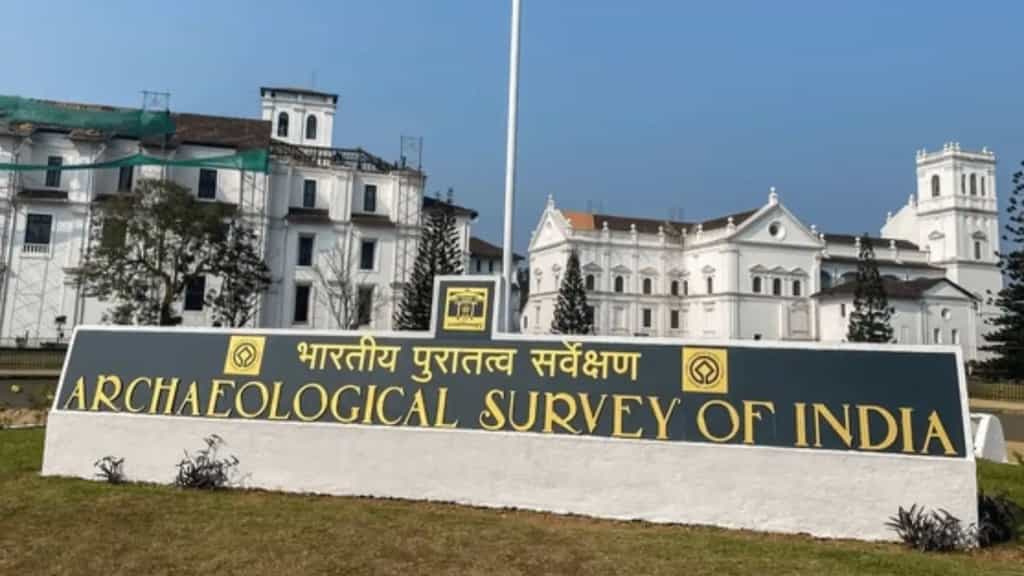
In less than two weeks, the conservation of monuments in the country will open up to the private sector, allowing corporate donors to directly engage conservation agencies—a responsibility that so far only rested with the Archaeological Survey of India (ASI).
The Ministry of Culture is in the process of empanelling conservation architects, and more than 20 private agencies with experience in heritage conservation from across the country have applied to its Request for Proposal (RFP), The Indian Express has learnt.
Once the RFP closes on January 12, an internal committee will be formed by the ministry to vet the applications and allow the empanelment of the conservation architects, sources said. The process is expected to take another week, and soon after, private donors can engage these agencies directly, they added.
The Indian Express had reported in September last year that the government was planning to allow the private sector in the core conservation work at protected monuments, so far the monopoly of the ASI. Officials say this is being done with an aim to build capacity in the heritage sector, and the work will be carried out by private agencies within a framework set by the ASI and will be monitored from time to time.
Among the criteria set for conservation architects is experience in executing conservation or restoration of centrally protected monuments under the ASI, state archaeology departments, Central Public Works Department (CPWD) or state PWD. Experience in heritage projects of PSUs or municipal corporations, private palaces, or buildings will also be counted, provided the structures are at least 100 years old.
The donor agency—which is offering funding for the project to the National Culture Fund (NCF), as CSR—needs to be provided independence to choose heritage conservation architects of their own choice, officials said on the rationale behind the move.
The funds given by the donors should be utilised properly within the stipulated time, and the works should be completed within the time frame fixed by the donor. This will not only complement the ASI’s efforts in conservation but also help to create a national talent pool of human resources, they added.
The execution of the approved Detailed Project Report (DPR) will be done by the executing agency under the guidance of heritage conservation architects and the overall supervision of ASI/concerned government agency to ensure that the work adheres to the approved plan and conservation norms.
Until now, the core conservation work of as many as 3,700 protected monuments across the country has been solely the ASI’s mandate, which functions under the Ministry of Culture. Funds to the culture fund would go to the ASI for doing the conservation work.
The NCF was set up in 1996 with an initial corpus of Rs 20 crore by the government. The idea was to retain the base corpus and use the interest for conservation activities at the monuments. Ever since, Rs 140 crore has come into NCF through corporate and PSU donations, which have been used to fund around 100 conservation projects at protected monuments. While 70 such projects have been completed, around 20 projects are ongoing, as per officials.
The ASI has been the implementation agency for all these projects, from creating a DPR to executing them. However, there was a perception that this process had been slow with just the ASI as the sole implementation agency. The new plan is expected to enhance capacity in conservation work and ensure stricter compliance timelines—which is something corporate sponsors have struggled with in the past, despite contributing to the culture fund.
Earlier, the government had launched an ‘Adopt a Heritage’ scheme to let corporates and PSUs become ‘Monument Mitras’ and create amenities like ticket windows, toilet blocks, entry and exits, cafes, etc. However, this is the first time that private donors will be able to sign up for the execution of core conservation work at the monuments.
The ministry has initially put up a list of 250 monuments that require conservation work, and the donors can pick from those. However, if they are looking for something in their specific region or other criteria, they can write to us and discuss it further, officials said.
India is moving towards PPP models, allowing private entities to join the ASI for fast-tracking conservation, under state supervision. The United Kingdom has set up the Churches Conservation Trust, managing historic buildings with robust private involvement. The United States also involves private sector funding and organisations in protecting cultural and natural heritage. Germany and the Netherlands have also established various foundations to manage historic buildings, supported by private funding.
Editorial Context & Insight
Original analysis & verification
Methodology
This article includes original analysis and synthesis from our editorial team, cross-referenced with primary sources to ensure depth and accuracy.
Primary Source
The Indian Express