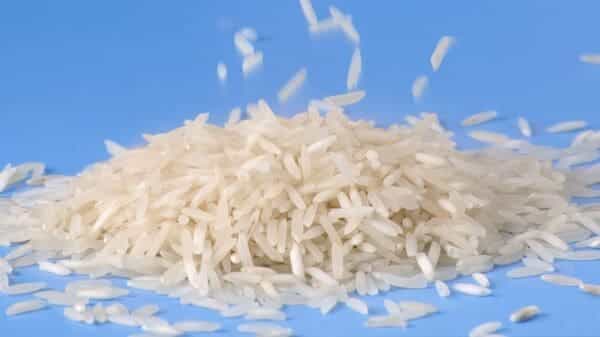
New Delhi: India’s basmati rice trade with Iran is facing a fresh bout of uncertainty as the US has threatened 25% tariff on countries that trade with unrest-hit Tehran, a development that threatens to disrupt exports and has prompted the commerce ministry to step in. The ministry will hold consultations with exporters to assess the impact and safeguard shipments to Iran, two people in the know said. The date of the meeting is yet to be finalized.
Iran is India’s third-largest market for its famed basmati rice, having exported 599,000 tonnes worth $468.1 million during April–November 2025.
Exporters say the lack of clarity on whether the tariff would apply only to US-bound goods or also to India-Iran trade has made it difficult to price contracts and plan shipments, especially as India already faces a 50% US tariff on some exports from 27 August 2025.
The ministry's meeting will focus on understanding exporters’ concerns and discussing measures to ensure continuity of shipments, said the first among the two persons cited above.
“Basmati rice exporters lack clarity on the proposed new US tariff and will meet commerce ministry officials handling agricultural exports to seek clarity on the issue,” said Satish Goel, president of the All India Rice Exporters Association (Airea).
The Agricultural and Processed Food Products Export Development Authority (Apeda) is the commerce ministry arm that addresses exporters’ concerns through policy interventions from time to time.
While Iran remains one of India's top destinations for basmati, sanctions and tighter market restrictions have considerably impacted Indian business in the country. Many traders have so far been routing this trade through other channels
“Considering the limited direct trade with Iran, we have been conducting the majority of our trade through the UAE, where Iranian importers operate locally. This arrangement has helped us mitigate risks," said Akshay Gupta, head of bulk exports at KRBL Ltd, a major basmati rice firm that owns a string of brands including India Gate.
"However, the fresh US tariff (threat), including the proposed 25% levy, adds an additional challenge for the Indian basmati rice sector,” Gupta said.
According to Goel of Airea, nearly one-third of Indian shipments are routed through Dubai, where Iranian importers have set up their offices.
Asked about the impact of escalating civil unrest and widespread protests in Iran on exports, Goel said, “It is too early to say anything on it. Basmati shipments have been on hold from the last 7-8 days and we have been assured it will start again from 20 January."
Exporters said payment risks have increased amid the ongoing unrest and communication disruptions in Iran, compounding the uncertainty created by tariff-related concerns.
“Exporters are facing payment delays, but it is difficult at this stage to quantify the amount stuck in trade due to the unrest and internet shutdown,” said Pankaj Goel, vice-president of the All India Rice Exporters Association.
In Iran, nationwide protests that began late December over dire economic conditions have escalated into the largest anti-government demonstrations since 1979. The protests met with a severe crackdown by security forces that rights groups say has killed over 2,500 people and led to tens of thousands of arrests amid a wide internet blackout, according to an AP report.
Agriculture experts say the situation calls for continued engagement between the government and the industry amid tariff-related uncertainty.
“Given the lack of clarity on the proposed US tariff and its scope, exporters need policy guidance to avoid disruption to ongoing contracts. The consultations with the commerce ministry will be important to assess risks and ensure continuity of basmati rice exports,” said Binod Anand, an agriculture expert and a member of the government’s committee on minimum support prices.
Queries sent to the commerce ministry and Apeda on 14 January remained unanswered till press time.
As per commerce ministry data, India's total export of goods to Iran during April-October, the first seven months of FY26 were at $693 million, while imports were valued at $177 million.
India’s trade with Iran remains modest but steady, with exports of $1.24 billion and imports of $441.8 million in FY25. In FY24, exports were at $1.22 billion and imports at $625 million.
Besides basmati rice, India’s exports a range of agricultural and industrial products to Iran. In FY25, the shipments included fruits and nuts ($55.91 million), tea, coffee and spice products ($70 million), sugar and related confectionery ($14.5 million), organic chemicals ($29.27 million), pharmaceutical products ($28.29 million), animal feed and fodder products ($71 million), and personal care and cosmetic items ($25.71 million).
Editorial Context & Insight
Original analysis and synthesis with multi-source verification
Methodology
This article includes original analysis and synthesis from our editorial team, cross-referenced with multiple primary sources to ensure depth, accuracy, and balanced perspective. All claims are fact-checked and verified before publication.
Primary Source
Verified Source
mint - news
Editorial Team
Senior Editor
David Kim
Specializes in Business coverage
Quality Assurance
Associate Editor
Fact-checking and editorial standards compliance