A bench of Justices Aravind Kumar and Prasanna B Varale delivered the verdict after reserving its order on the bail plea on December 10.
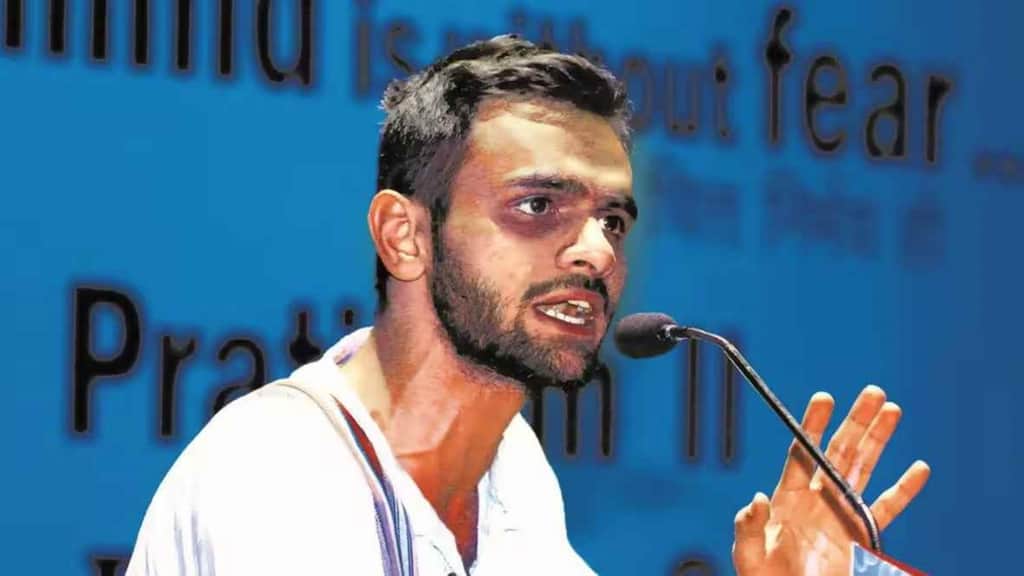
Khalid, an activist and a former JNU student, is facing charges of criminal conspiracy under Unlawful Activities (Prevention) Act in connection to the 2020 Delhi riots, which left 53 people dead and hundreds injured. Khalid was arrested in 2020 and since then there have been multiple court hearings till date.
In a hearing before the bench in October, Khalid had argued there are 751 FIRs lodged in connection with the February 2020 Delhi riots but he has been accused in only one FIR while challenging the conspiracy charge against him.
Senior advocate Kapil Sibal, appearing for Khalid, “There are 751 FIRs. I am charged in one. If it’s a conspiracy, it’s a bit surprising — if I am responsible for the riots.”
Sibal further pointed out that Khalid was not present in Delhi when the riots took place and there were no recoveries of any kind of weapons, arms, acid or any incriminating material made from him or at his instance.
“If am not there, how can I be connected?” Sibal asked.
The Delhi High Court bail rejection verdict on September 2 had prima facie found that Khalid and Imam were the first ones to act after the Citizenship Amendment Bill was passed in early December 2019, by creating WhatsApp groups and distributing pamphlets in the Muslim populated areas calling for protests and Chakka-Jaams, including the disruption of essential supplies.
The prosecution had argued that Imam and Khalid were the “intellectual architects” behind the entire conspiracy, working in tandem with the other co-conspirators, each of whom played their respective roles in the conspiracy.
“Suffice it is to say that the alleged inflammatory and provocative speeches delivered by the Appellants, when considered in totality, prima facie indicates towards their role in the alleged conspiracy,” it held.
The high court also rejected the claims of the defence counsel who argued that the alleged acts of Khalid and Imam, would at best, fall under Section 13 of the UA(P) Act, that is, Chapter III of the UA(P) Act, but not under Chapter IV of the UA(P) Act, is concerned.
“We may note that this Court, while exercising its appellate jurisdiction in the present proceedings, arising from the refusal to grant bail, is not required nor is it empowered to hold a detailed analysis of the evidence for determining the validity of the accusations levelled against the Appellants,” it added.
Editorial Context & Insight
Original analysis & verification
Methodology
This article includes original analysis and synthesis from our editorial team, cross-referenced with primary sources to ensure depth and accuracy.
Primary Source
The Indian Express