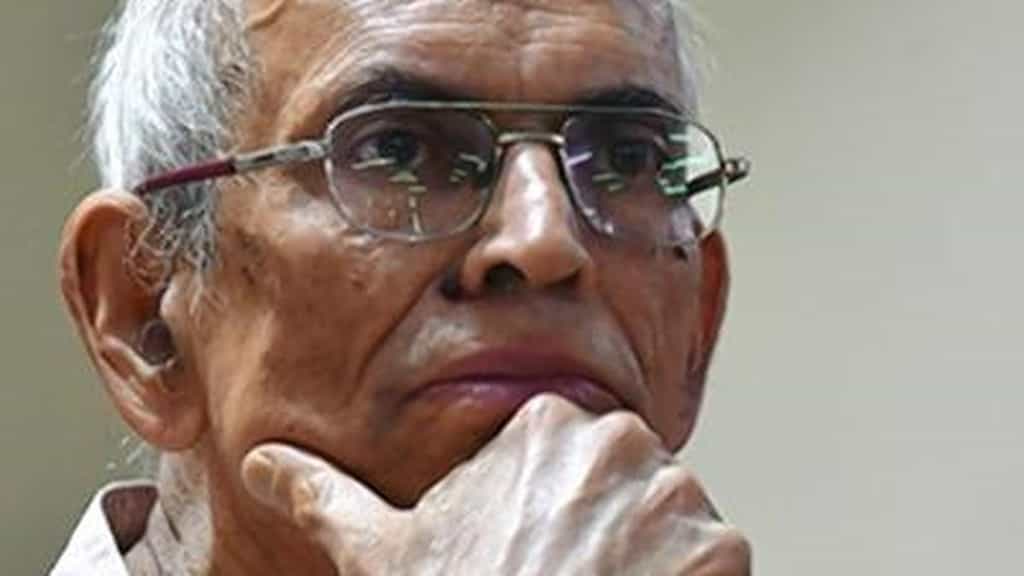
Renowned ecologist Madhav Gadgil, who passed away in Pune on January 7 night following a brief illness, had a long association with Karnataka and Bengaluru.
Mr. Gadgil headed the Western Ghats Ecology Expert Panel also known as the Gadgil Committee, which submitted its report in 2011 to the Union Ministry of Environment and Forest. The committee, in its report, had made several recommendations to safeguard the fragile Western Ghats. The report had recommended declaring a majority of the Western Ghats running across different States as Eco Sensitive Areas. It had also called for setting up a Western Ghats Authority.
Karnataka Environment Minister Eshwar Khandre, expressing condolences, said that he was deeply saddened to hear the news of the passing of Mr. Gadgil.
“Mr. Gadgil, who dedicated his entire life to environmental protection and the survival and conservation of one of the world’s most beautiful places for biodiversity, left us at the age of 83. May his soul rest in peace, and may God give his family and friends the strength to bear the pain of separation,” the Minister said.
Mr. Khandre said that many points in the report submitted by Mr. Gadgil are guidelines for India to protect its natural environment.
“He always expressed his concern about the gradual destruction of the hilly areas of the Western Ghats, which is the source of many rivers, apart from being an oxygen reservoir and also helps in blocking the monsoon winds, and, in turn, brings rains across the country,” Mr. Khandre said.
Mr. Gadgil was closely associated with the Indian Institute of Science (IISc.) in Bengaluru. He helped establish the Centre for Ecological Sciences (CES) in 1983
“CES was born out of ecological research initiated at the Centre for Theoretical Studies by Madhav Gadgil, who joined the then Centre for Theoretical Studies (CTS) in 1973, having obtained a Ph.D in biology at Harvard University with a thesis in Mathematical Ecology. Madhav pursued research in both theoretical biology and field ecology,“ CES states on its website.
CES further said that Mr. Gadgil initiated field studies at the newly established Bandipur Tiger Reserve in 1974 on the dry deciduous forest ecosystem dotted with man-made ponds and extensive open areas covered with grass.
“Madhav Gadgil conducted an ecological reconnaissance of this whole tract and formulated a proposal for the establishment of a large nature reserve in this region. This eventually led to the establishment of the country’s first biosphere reserve, the Nilgiri Biosphere Reserve, in 1986. Elephants were a striking component of the wildlife of this tract, and Madhav Gadgil organized the first census of wild elephants in the country in these areas,” CES states.
It also states that, in 1974, when there was an agitation by the basket-weavers of Karnataka contending that their livelihood was threatened by overuse and exhaustion of bamboo resources by paper mills, the Karnataka State Council for Science and Technology asked Mr. Gadgil to look into the ecology and management of bamboo resources of the State.
Editorial Context & Insight
Original analysis & verification
Methodology
This article includes original analysis and synthesis from our editorial team, cross-referenced with primary sources to ensure depth and accuracy.