Israel’s decision to formally recognise Somaliland as an independent and sovereign state has triggered a sharp diplomatic backlash across Africa and the Middle East, reopening a long-running debate over one of the world’s most unusual political entities.
While Israel became the first country to extend official recognition, the United States has publicly ruled it out, and the African Union has moved swiftly to reject the move, warning it could destabilise the continent.
Somaliland, a self-governing region in northern Somalia, declared independence in 1991 after the collapse of the Siad Barre regime. More than three decades on, it functions as a de facto state, with its own government, currency, army and elections.
Yet it remains unrecognised by Somalia, the United Nations, the African Union and every major power, a diplomatic limbo that Israel’s recognition has now brought into sharp focus.
Somalia’s government described Israel’s recognition as a “deliberate attack” on its sovereignty. The African Union also lashed out at the move saying that Somaliland “remains an integral part” of Somalia and warning that recognition risks setting a dangerous precedent for secessionist movements across Africa.
Turkey and Egypt also condemned the move, with Cairo cautioning against the creation of “parallel entities” that could undermine regional stability.
Israel, however, framed its decision as part of a broader strategic realignment. Prime Minister Benjamin Netanyahu said recognition was “in the spirit of the Abraham Accords”, the normalisation agreements brokered under US President Donald Trump during his first term.
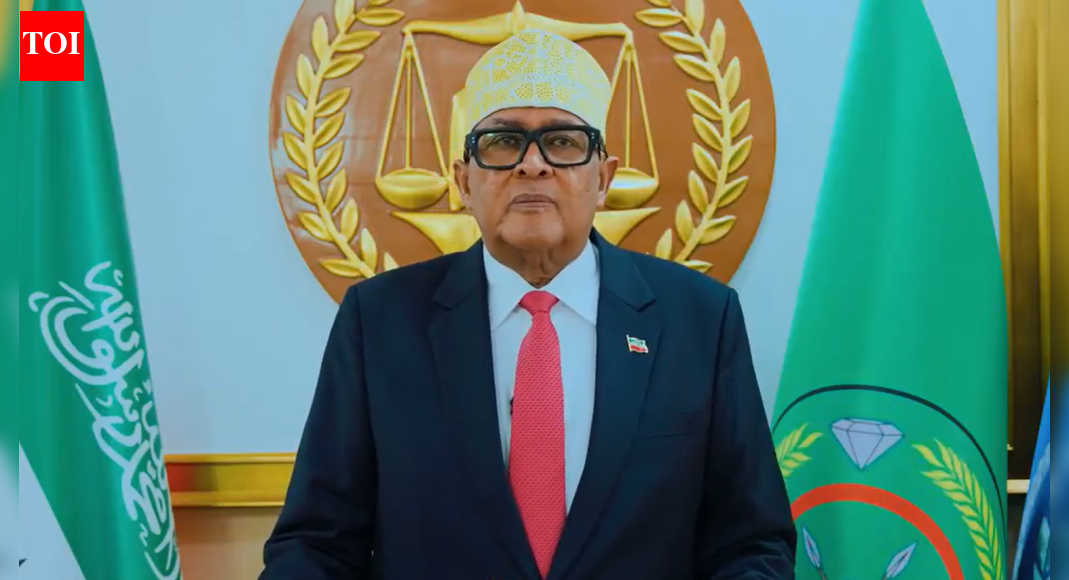
Somaliland’s President, Abdirahman Mohamed Abdullahi, hailed the move as a “historic moment” and signalled readiness to join the Accords, describing Israel as a new strategic partner.
Crowds celebrated in Hargeisa, Somaliland’s capital, waving flags of the unrecognised republic.Trump himself offered a blunt contrast, dismissing the idea of US recognition with a flat “no”, adding: “Does anyone know what Somaliland is, really?”The US administration as reported by The Guardian, is reportedly divided over recognizing Somaliland, amid concerns it could jeopardize military cooperation with Somalia, where US troops support Somali forces against al-Shabaab.
Israel’s regional security calculations may underpin the move. Analysts at the Institute for National Security Studies said last month that Israel seeks partners in the Red Sea area for strategic reasons, including the prospect of a future confrontation with Yemen’s Iran-backed Houthi movement, news agency AFP reported. Since the Gaza war erupted in October 2023, Israel has repeatedly struck targets in Yemen in response to Houthi attacks that the rebels said were carried out in solidarity with Palestinians.
Those attacks have paused since a fragile Gaza truce took hold in October.Somaliland, which lacks international recognition, has struggled to attract loans, aid and investment and remains deeply impoverished. Tensions rose after landlocked Ethiopia agreed last year to lease part of Somaliland’s coastline for a port and military base, angering Somalia. Israel has meanwhile sought to deepen ties across the Middle East and Africa, building on the 2020 normalization deals.
Somalia continues to reject Somaliland’s demand for independence and has repeatedly condemned what it calls unilateral efforts by Hargeisa to strike international agreements. Somaliland, for its part, argues that it is exercising rights it reclaimed in 1991, following the collapse of the Somali state.In December 2023, Mogadishu said it was ready to reopen dialogue with Somaliland under mediation by neighbouring Djibouti.
Days later, however, Somaliland announced a provisional agreement with Ethiopia granting Addis Ababa access to the port of Berbera. The deal triggered immediate backlash from Somalia, which described it as an illegal act of “aggression” and recalled its ambassador from Ethiopia.
The roots of the dispute lie in the violent collapse of Somalia itself. In the late 1980s, opposition movements formed across the country to challenge the military regime of Mohamed Siad Barre.
In 1991, rebel forces drove Barre out of Mogadishu, plunging southern Somalia into chaos.In the northwest, the Somali National Movement (SNM) seized control and declared independence as the Republic of Somaliland. While Mogadishu descended into militia warfare and state collapse, Somaliland’s leaders chose a different path, cutting ties with the south and beginning a slow process of rebuilding institutions.For much of the next two decades, Somalia lacked a functioning central government. Islamist group Al-Shabaab gained control over large parts of the south, while millions were displaced by violence, famine and humanitarian crises. By 2012, more than four million people depended on aid, and the country remained deeply unstable.
Somaliland sits on the Gulf of Aden, along one of the world’s most critical maritime chokepoints linking the Red Sea to the Indian Ocean.
Analysts say Israel is seeking allies in the Red Sea region amid concerns over Yemen’s Houthis, who have previously targeted Israeli interests during the Gaza war.
The Gulf of Aden sits between the Horn of Africa and the Arabian Peninsula and links the Indian Ocean to the Red Sea, which in turn connects to the Suez Canal — one of the world’s busiest shipping corridors.
Gulf of Aden has also been targeted by the Houthis. In late 2023, the Yemen-based group has targeted commercial vessels using missiles, drones and small boats, claiming the strikes are linked to the Gaza war. The attacks have forced major shipping lines to divert away from the Red Sea and Suez Canal, increasing costs and transit times.