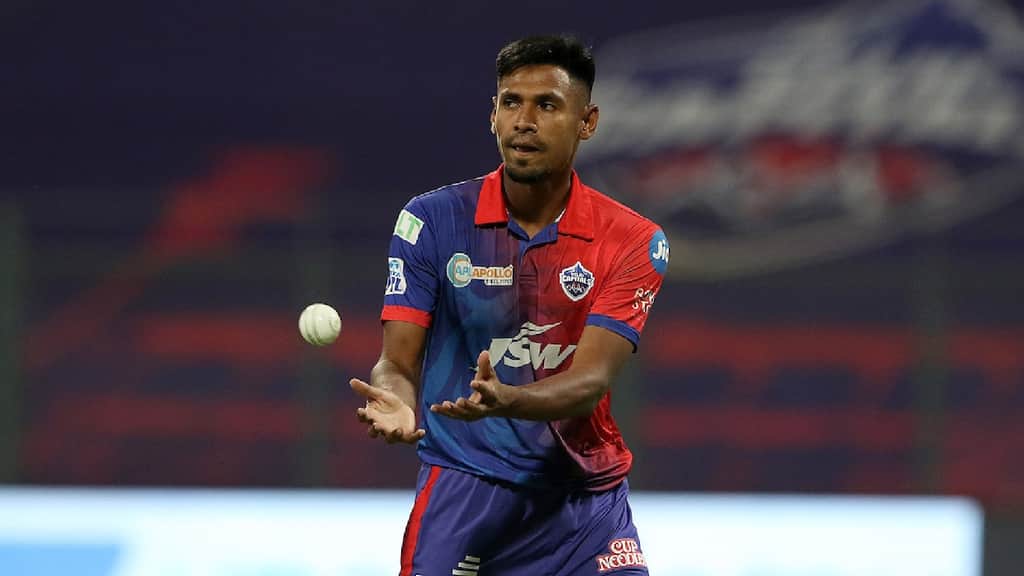
The Board of Control for Cricket in India’s (BCCI) decision to instruct Kolkata Knight Riders to release Mustafizur Rahman is not just a sporting controversy. It is a strategic error with consequences far beyond cricket. By weaponising cricket to signal political displeasure, the BCCI has weakened India’s soft power in South Asia, reinforced perceptions of Indian dominance and narrowed one of the few remaining spaces for people-to-people engagement in a deeply fragile region.
This is not an argument in defence of the Bangladeshi state nor an attempt to downplay the violence faced by religious minorities in Bangladesh. Those concerns are real and urgent. They deserve sustained international attention. But targeting an individual cricketer, who has no control over state policy or law enforcement, is not accountability. It is coercion presented as moral action.
India already faces a perception problem in its neighbourhood. In Nepal, Sri Lanka, Bangladesh and even Afghanistan, New Delhi is often seen as a regional hegemon. Its language may be measured but its actions are frequently viewed as heavy-handed when dealing with smaller neighbours. The Mustafizur episode fits easily into that narrative.
From Dhaka’s perspective, this is a reminder of asymmetrical power. India decides who plays in the world’s most lucrative cricket league and who does not. The optics are hard to ignore. India appears cautious when dealing with stronger states and punitive when dealing with states with limited leverage. This inconsistency erodes moral credibility and fuels resentment among ordinary people.
For Bangladeshis, the symbolism is especially raw. Mustafizur Rahman is not just a cricketer; he is a national icon. Every Bangladeshi loves to see their players in the IPL. When that player represents Kolkata, the connection becomes personal. Language, culture and shared history bind the city to Bangladesh in profound ways. Playing for Kolkata Knight Riders signals recognition and belonging. Removing Mustafizur under political pressure is not neutral. It is an emotional rupture at this stage.
India’s experience with Pakistan offers a warning. Nearly a generation of Pakistanis has grown up without sustained sporting contact with Indian players. The result has not been moderation or reconciliation but deeper alienation and radicalisation. Cutting sporting ties did not reduce risk. Rather, it has hardened attitudes and increased India’s long-term strategic risk.
By sidelining Bangladeshi players today, India risks repeating that mistake. When young Bangladeshis see their heroes excluded for political reasons rather than sporting ones, resentment starts to build. And when resentment deepens, minority communities are often at risk of becoming more vulnerable as anger rooted in resentment rarely distinguishes between governments and citizens.
Defenders of the BCCI’s move argue that extraordinary steps are needed to signal outrage over attacks on minorities in Bangladesh. That argument does not hold up. Indian-origin communities have faced grievous violence abroad. A Hindu Kannadiga man was brutally decapitated in broad daylight before his family members in Texas. A Telugu-speaking Indian student was killed in a hit-and-run by a Seattle police officer who later trivialised her death. These were horrific tragedies, among many such hate-driven incidents reported across the world. Yet India did not respond with sporting sanctions or economic pressure against those countries.
The difference here is power, not principle. India shows restraint with stronger states and assertiveness with smaller neighbours. That is not principle. That is asymmetry framed as moral action, which unfortunately looks less like leadership and more like intimidation. Accountability for violence against minorities must lie with the Government of Bangladesh through diplomatic pressure and multilateral forums. It should not be imposed on athletes whose careers become collateral damage.
What makes this episode more troubling is that the BCCI knows better, for it is not an unsophisticated actor. It is a corporate behemoth with immense global influence. And a record of strategic foresight as evidenced by its sustained support for Afghanistan cricket through war and political upheaval. This shows that sport can be kept separate from politics when there is will. In South Asian international relations, cricket boards are powerful non-state actors. Their decisions resonate far beyond the field and ignoring that reality does not change it.
This argument is not a call for silence or appeasement. It is a call for clarity. Soft power does not work through intimidation. It works through attraction. Culture, cinema, language and cricket have shaped attitudes in this region more effectively. Kolkata, the IPL, Shah Rukh Khan and shared Bengali identity offer influence that arm-twisting measures cannot replicate.
Forcing Mustafizur Rahman out of the IPL will not protect minorities, stabilise the region or enhance India’s moral standing. Rather, it carries the potential to deepen mistrust and shrink the already limited space for informal and back-channel diplomacy. Cricket has often softened borders when politics failed. Turning it into a political weapon is not strength. It is myopic.
Editorial Context & Insight
Original analysis & verification
Methodology
This article includes original analysis and synthesis from our editorial team, cross-referenced with primary sources to ensure depth and accuracy.
Primary Source
The Indian Express