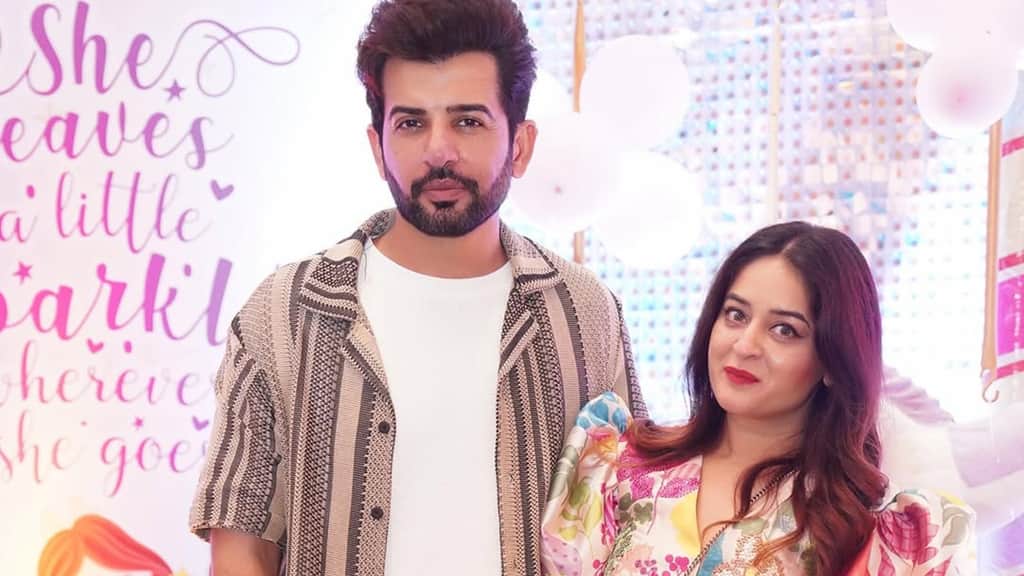
Jay Bhanushali and Mahhi Vij have announced their separation (Source: Instagram/Jay Bhanushali)
Separations within long-term marriages often come with assumptions of conflict, blame, or unresolved bitterness. Yet for many families, the decision to part ways is framed less by fallout and more by the need to protect children’s emotional stability. Television actors Mahhi Vij and Jay Bhanushali announced their separation after 14 years of marriage yesterday, issuing a joint statement on social media that emphasised mutual respect, calm decision-making, and shared parenting.
In their message, the couple stated, “Today we choose to part ways on a journey called life, yet we continue to have each other’s backs. Peace, growth, kindness and humanity have always been our guiding values.”
While the announcement surprised many, the language of the statement stood out for its clarity and restraint, particularly in how it addressed the absence of conflict. They wrote, “Though we walk separate paths, there is no villain in this story and no negativity attached to this decision. Before any conclusions are drawn, please know that we choose peace over drama and sanity above all else.”
A significant part of their statement focused on parenting through separation. Addressing their children, Mahhi and Jay said, “For the sake of our children – Tara, Khushi, Rajveer, we commit to being the best parents, the best friends and whatever else it takes to do what is right for them.” They further reaffirmed their bond beyond marriage, concluding, “We continue to respect one another, support one another and remain friends as we always have been with mutual respect. We ask for your respect, love and kindness as we move forward.”
Sonal Khangarot, licensed rehabilitation counsellor and psychotherapist, The Answer Room, tells indianexpress.com, “When parents say they’re ‘choosing peace over drama’ during a separation, it shows up in small, daily choices. It means not arguing loudly in front of children, even when emotions are high, and resisting the urge to vent about the other parent to family WhatsApp groups where the child may overhear.”
Mahhi Vij and Jay Bhanushali were together for 14 years (Source: Instagram/Mahhi Vij)
For Indian couples, she adds that this could look like calmly coordinating school pickups despite living with in-laws, attending parent-teacher meetings together without hostility, or letting grandparents maintain relationships with both parents. Emotionally, it involves regulating anger, tolerating discomfort, and modelling respectful communication so children don’t feel caught in loyalty conflicts.
Committing to being ‘best parents’ or even ‘best friends’ after separation requires clear boundaries to protect children’s emotional clarity. Khangarot states, “This means separating parenting from personal history—no mixed signals like family outings that mimic a reunion unless explicitly explained to the child. Communication should be predictable, respectful, and child-focused: discussing routines, school, health, and discipline without emotional spillover.”
When there is “no villain” in a separation, Khangarot notes, grief can feel invalidated, especially in Indian contexts where endurance is praised over expression. “Processing emotions doesn’t mean creating conflict; it means giving yourself private, safe spaces to feel — through therapy, journaling, or trusted friendships rather than family gossip. Strength lies in naming disappointment without self-blame, allowing sadness without rushing to ‘move on,’ and understanding that peaceful endings still involve loss,” concludes Khangarot.
Editorial Context & Insight
Original analysis & verification
Methodology
This article includes original analysis and synthesis from our editorial team, cross-referenced with primary sources to ensure depth and accuracy.
Primary Source
The Indian Express