

Key takeaways
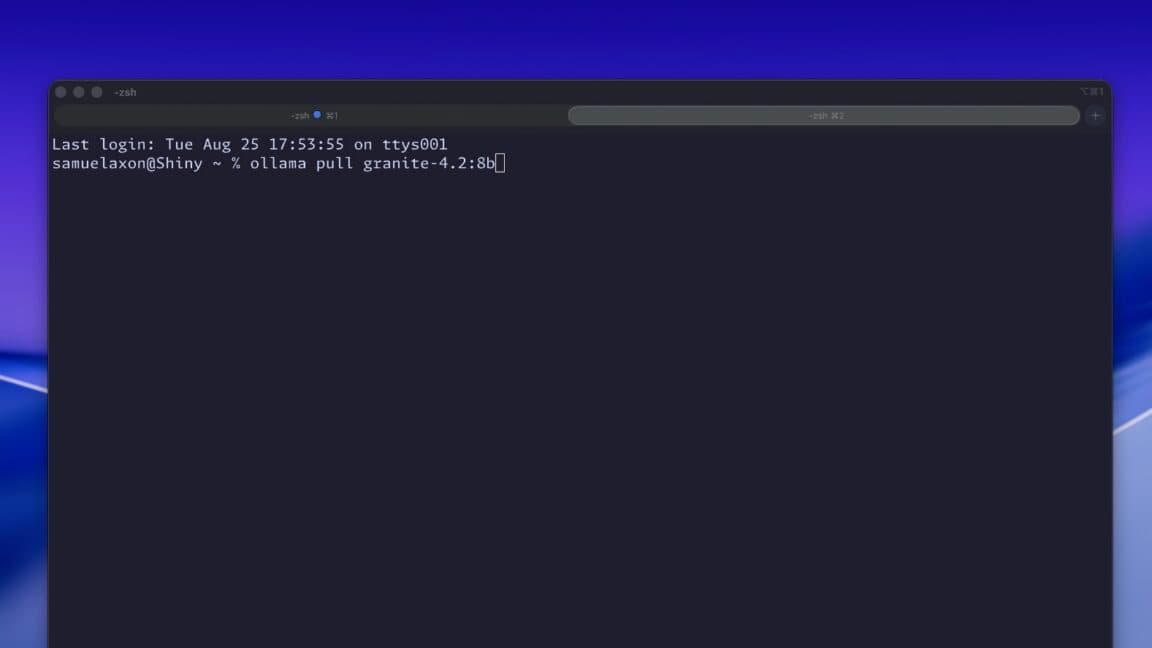
- IBM has rolled out the newest models in its family of open-weight large language models designed to be downloaded and self-hosted.
- The 8B and 30B variants (not the 3B one) also go through an agentic reinforcement-learning block; they were trained for expanded…
- ” When researchers or developers in the field say a model is capable of reasoning, they do not mean it in the same sense as we often assume…
What happened
IBM has rolled out the newest models in its family of open-weight large language models designed to be downloaded and self-hosted. 2 comes in 3B, 8B, and 30B parameter variants. Like previous versions, IBM is taking a decoder-only approach here. These new releases offer a 128,000-token context window natively.
The 8B and 30B variants (not the 3B one) also go through an agentic reinforcement-learning block; they were trained for expanded capabilities like using the terminal, searching the web, or using external tools. The 3B model supports tools too, but without the same level of specialized training.
” When researchers or developers in the field say a model is capable of reasoning, they do not mean it in the same sense as we often assume when talking about human reasoning; the models are not consciously understanding the problem. Instead, they’re talking about functional reasoning, in particular via “chain-of-thought” and carrying intermediate results forward through multiple steps.
Why it matters
For the user, this means more rigorous and accurate responses in some cases, but often slower response times and higher compute demands. IBM’s Granite family of models rarely grabs headlines for being the fastest or most aggressively innovative. Relative to even other competitors in the local enterprise space, like Nvidia’s Nemotron, the pitch seems to be predictable deployments—which is the priority you might expect from IBM these days.
What to watch
There has been an enormous amount of discourse about the cost and compute crunch around frontier cloud models from companies like Anthropic or OpenAI lately. Across many domains, both individual developers and enterprise organizations have been exploring local models as cheaper alternatives.
That has also led to increased interest in model routers—AI tools whose main job is to interpret user prompts, tasks, or projects and route them to appropriately scoped models to balance performance, speed, and cost. Models like this are also popular with hobbyists, AI researchers, and individual developers because they can be tinkered with on local hardware without per-token API fees.