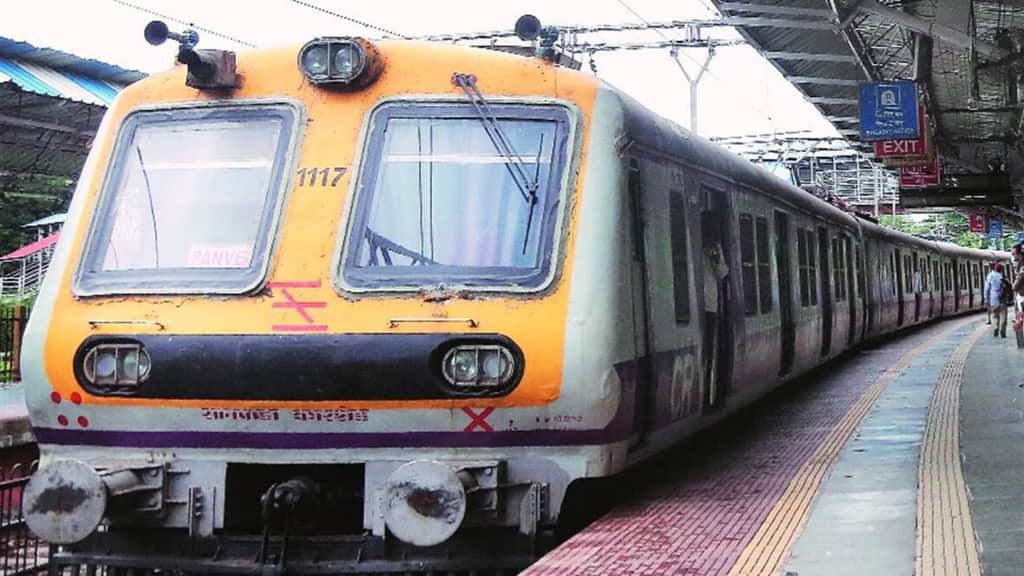
On June 9, five commuters were killed after trains passing in opposite directions came dangerously close in the area.
Fatalities on Mumbai’s suburban railway network declined by 7% in 2025, with 2,287 commuter deaths recorded during the year, compared to 2,468 in 2024, according to data from the Government Railway Police (GRP). The number of injured commuters also fell marginally by 5%, from 2,697 to 2,554.
Despite the year-on-year decline, an average of six people continued to lose their lives every day while travelling on the city’s railway network, underlining persistent safety challenges, particularly in the extended suburbs.
Among railway sections, Thane reported the highest number of deaths at 278, followed by Kalyan (266) and Borivali (244). Activists said the concentration of fatalities in the city’s outskirts reflects rapid urban expansion without corresponding upgrades in public transport capacity.
Track crossing remained the leading cause of deaths, accounting for 1,063 fatalities in 2025, nearly half of all recorded deaths. The Thane section alone reported 144 such cases. Overcrowding-related incidents, where commuters fell from moving trains after losing balance, resulted in 525 deaths, with the Kalyan section reporting the highest number of such cases at 98.
Other causes included natural deaths, suicides, electrocution, being hit by railway infrastructure, and falls into platform gaps. On the Central Railway, nearly 30% of all fatalities were reported from the Thane, Dombivli, and Kalyan stretch combined. Activists and commuters flagged the Mumbra curve as a particularly vulnerable zone, citing repeated close-call incidents. On June 9, five commuters were killed after trains passing in opposite directions came dangerously close in the area.
Passenger groups attributed the risks to overcrowding and limited transport alternatives. Since a large share of commuters travel daily from the Kalyan–Dombivli–Thane belt, where alternative public transport options to Mumbai are limited.
Experts said one of the proposed safety interventions is the introduction of automatic doors on non-AC coaches, though this would require structural modifications.
“Automatic doors can help reduce commuter deaths, but only if they are implemented with structural changes that account for severe overcrowding in non-AC coaches,” said Dr Sarosh Mehta, an orthopaedic surgeon-turned railway safety activist. “Without redesigning coach layout, ventilation and passenger movement, such measures may fall short in addressing the risks created by the absence of transport alternatives.”
Railway officials pointed to safety measures already undertaken. In submissions to the Bombay High Court last year in response to a public interest litigation, Central Railway said it had fenced 47 platforms, sealed 204 trespass-prone access points, removed 1,260 encroachments, and installed warning systems at identified high-risk locations. Longer-term infrastructure projects include the Panvel–Karjat and Airoli–Kalwa corridor upgrades.
“There is limited confidence in introducing automatic doors on non-AC coaches because multiple trials have faced challenges,” said a senior Central Railway official. “The longer-term approach is a phased transition to an all–air-conditioned fleet, the 238 new AC locals ordered under MUTP3, with new AC locals expected to be inducted from 2027 through 2031.”
Editorial Context & Insight
Original analysis & verification
Methodology
This article includes original analysis and synthesis from our editorial team, cross-referenced with primary sources to ensure depth and accuracy.
Primary Source
The Indian Express