

Key takeaways
- Unitree's IPO valued the robot maker at around $50 billion.
- 1 billion yuan ($904 million), making it the first publicly traded maker of humanoid robots on the Chinese mainland.
- Chinese humanoid makers sell a large share of their machines to state-backed training centers, the FT reports.
What happened
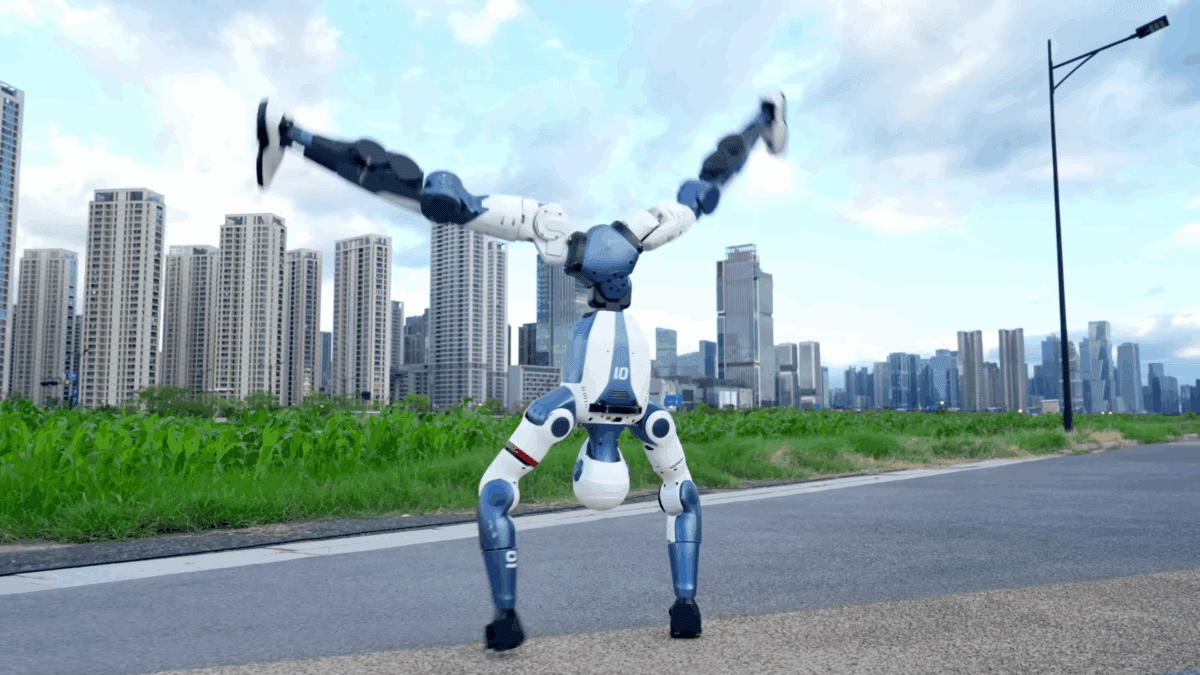
Unitree's IPO valued the robot maker at around $50 billion. But a closer look shows much of the demand for its robots comes from state-backed centers that buy the machines and sell the training data right back to the manufacturers. Unitree Robotics saw its stock jump as much as 629 percent during its Shanghai debut, closing up 460 percent, according to Bloomberg.
"There's clearly no fundamental basis for the share price surge," said Vey-Sern Ling of Union Bancaire Privée. Early-stage investors are already looking for an exit, the FT reports. It echoes Nvidia's direct and indirect investments in AI firms, most recently in Ohio, where Nvidia is backing a new OpenAI data center as a guarantor. Critics see this as self-sustaining demand that inflates the real size of the market.
Why it matters
1 billion yuan ($904 million), making it the first publicly traded maker of humanoid robots on the Chinese mainland. The closing price put Unitree's value at around $50 billion. Behind that surge sits a setup that looks a lot like the circular business model recently criticized in the US industry, according to a report by the Financial Times.
Chinese humanoid makers sell a large share of their machines to state-backed training centers, the FT reports. There, people "teach" the robots physical tasks through teleoperation. The centers then sell the collected data back to the manufacturers. Local governments and manufacturers often fund the centers together. "It also blurs the distinction between independent demand and demand created within a policy-supported ecosystem," said analyst Poe Zhao.
By June there were more than 90 such centers, according to Interact Analysis. The training data for a five-minute robot dance can cost up to one million yuan ($148,000). The dependence runs deep: At manufacturer Leju, training centers accounted for 45 percent of sales of its flagship robot. At Unitree, nearly three-quarters of humanoid revenue in the first nine months of 2025 came from education and research.
"Both sides get what they need, and both sides have something to show," one algorithms engineer said. Marco Wang of Interact Analysis said the data isn't "100 percent useful," since the robots don't run in real-world settings. Only two to three of every eight training hours are usable, one center manager said. 89 times revenue, according to Bloomberg, compared with about 20 times for its Hong Kong rivals.
What to watch
Nvidia CEO Jensen Huang, for his part, argues that these and other investments are needed to fuel the fast growth of a company that can't build the foundations for that growth entirely on its own. Beijing appears to see it the same way and is pushing the sector hard. About 20 percent of the IPO went to strategic investors, including AI startup Deepseek.
Supporters point to electric cars and solar panels, which China now dominates after state-driven demand got them started.