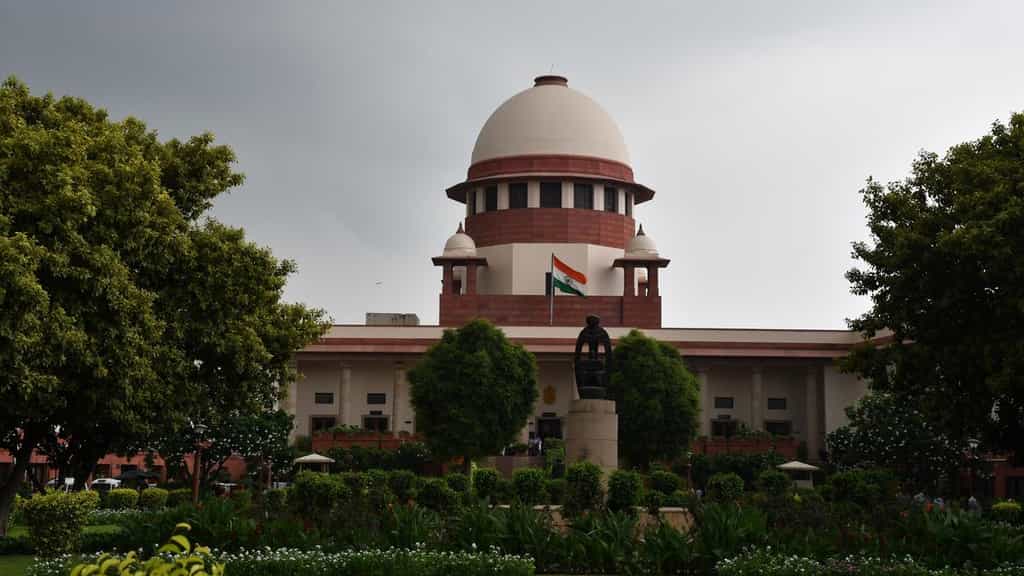
The Supreme Court has asked the Union government to introduce a ‘Romeo-Juliet’ clause in the Protection of Children from Sexual Offences (POCSO) Act to exempt genuine adolescent relationships from criminal prosecution by their families and others who use the law to “settle scores”.
The clause is a legal exemption to protect consensual sexual activity among teenagers who are close in age from prosecution for statutory rape.
“POCSO cases filed at the behest of a girl’s family objecting to romantic involvement with a young boy have become commonplace and consequent thereto these young boys languish in jails,” Justice Sanjay Karol observed in the post-script of a January 9 judgment authored by him.
The court ordered the judgment copy to be circulated to the Union Law Secretary in order to take steps to “curb this menace”. The court noted that it had repeatedly come across the abuse of POCSO.
“When an instrument of such noble and, one may even say, basic good intent is misused, misapplied and used as a tool for exacting revenge, the notion of justice itself teeters on the edge of inversion. Courts have in many cases sounded alarm regarding this situation,” Justice Karol wrote.
The court highlighted a “grim societal chasm” between child survivors of the heinous offences covered under POCSO who are “silenced by fear and their families are constrained by poverty or stigma” and those people equipped with privilege, literacy, social and monetary capital who can “manipulate” the law to their advantage.
“Not only are instances rife where the age of the victim is misrepresented to make the incident fall under the stringent provisions of this law but also there are numerous instances where this law is used by families in opposition to relationships between young people,” the court noted.
The judgment was based on an appeal filed by the State of Uttar Pradesh against an Allahabad High Court decision allowing an accused interim bail on the ground that there was wide inconsistency in the age of the victim as per the school records. It also took into account her statements regarding her age and intimacy with the accused.
The High Court, however, had ordered the State to conduct a medical examination, including ossification tests, on the survivor.
Setting the direction for a medical examination but not interfering with the bail order, the top court referred to Section 94 of the Juvenile Justice (Care and Protection of Children) Act, 2015 which prescribes a clear hierarchy for evidence, starting with the checking of documentary material, including school or municipal certificates, to establish age, failing which medical test could be ordered as a last resort.
The judgment referred to earlier orders which highlighted four crucial factors that courts must consider while dealing with cases in which an argument of consensual relationships between teenagers were raised. These included a careful examination of the nature of the relationship and intentions of both parties and a detailed consideration of the victim’s statement to note if the relationship was “consensual and based on mutual affection”.
Editorial Context & Insight
Original analysis & verification
Methodology
This article includes original analysis and synthesis from our editorial team, cross-referenced with primary sources to ensure depth and accuracy.