In 2023, the World Health Organization (WHO) formally recognised loneliness as a global health threat, carrying serious consequences for people’s health and well-being.
Between 2014 and 2023, an estimated 16 per cent of people reported feeling lonely, equivalent to almost one person in six, with estimated rates of loneliness higher among adolescents, according to a 2025 WHO report.
According to the study, using technology to address isolation and loneliness is a growing area of interest, with online games, artificial intelligence (AI), virtual reality (VR), and robotic companionship emerging as potential interventions.
In the final episode of the three-part series on robotics, Euronews Tech Talks explores the role of robotics in reducing loneliness, speaking with Karen Dolva, co-founder and former CEO of the Norwegian company No Isolation.
No Isolation was founded in 2015 as a tech company helping children with medical conditions and social difficulties to attend school.
“The idea was sparked by a friend of mine who had worked as a nurse on a children’s ward, and she mentioned these kids didn’t get nearly enough visitors,” Dolva told Euronews Next.
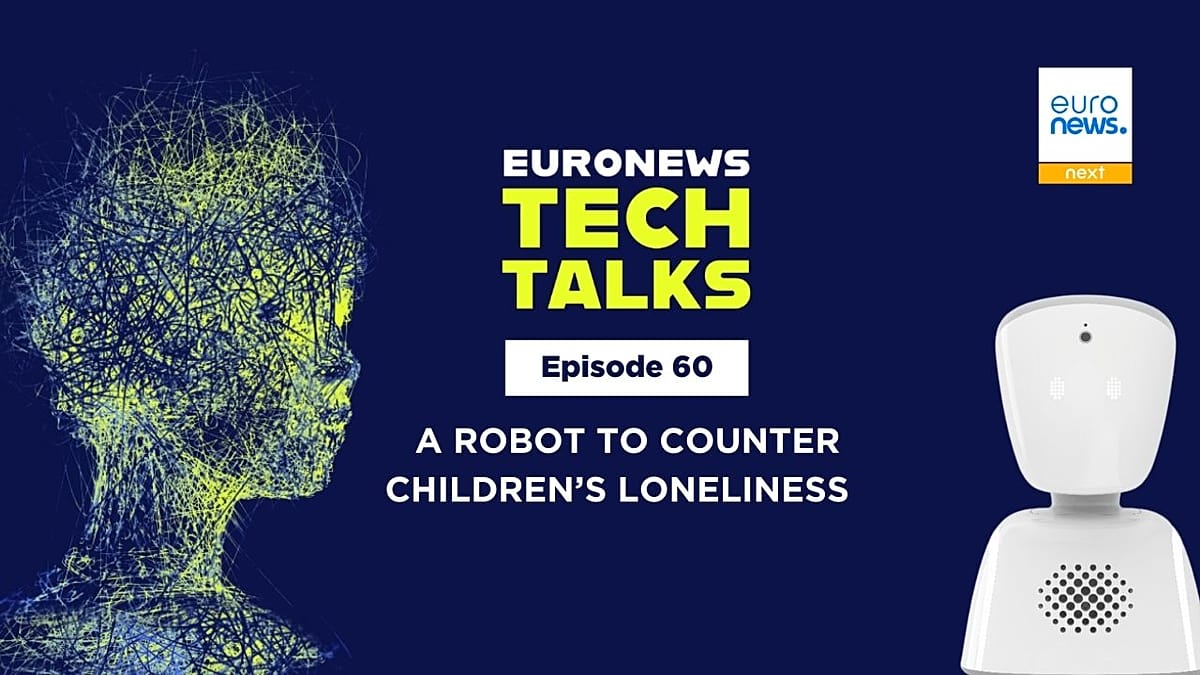
To counter children’s loneliness, the company developed AV1, a robot that sits in classrooms but is controlled remotely by children, who may be at home, in a hospital, or in a room next to the classroom, depending on their needs.
Dolva underlined that No Isolation’s objective is not replacing in-person education, but making it accessible to everyone.“They [the children] are not lazy, they’re ill. There’s always the intent of going back [to school],” she told Euronews Next.
“My personal goal with all of this has been to prove that this hard first impact companies can become very successful.”
AV1 is a small white robot with just a head and an upper body.
“We’ve followed a lot of the design principles by Pixar in trying to make something with a lot of human feeling and expression, but without the humanoid elements,” Dolva explained.
The robot looks nothing like a human, but its expression is reassuring, helping to put those around it at ease while reminding them that there is a human behind it.
The robotic look and the sober name, instead, are to make the robot accessible to a diverse age range.“We're going to try to fit a six-year-old boy and a seventeen-year-old girl and everyone in between [in AV1], so it needs to be quite neutral,” Dolva told Euronews Next.
Through AV1’s camera “eyes,” children can see what is happening in the classroom and can speak through the robot’s built-in speaker.
In most cases, families do not purchase the robot themselves, but through partnerships between No Isolation and local authorities or school administrators.