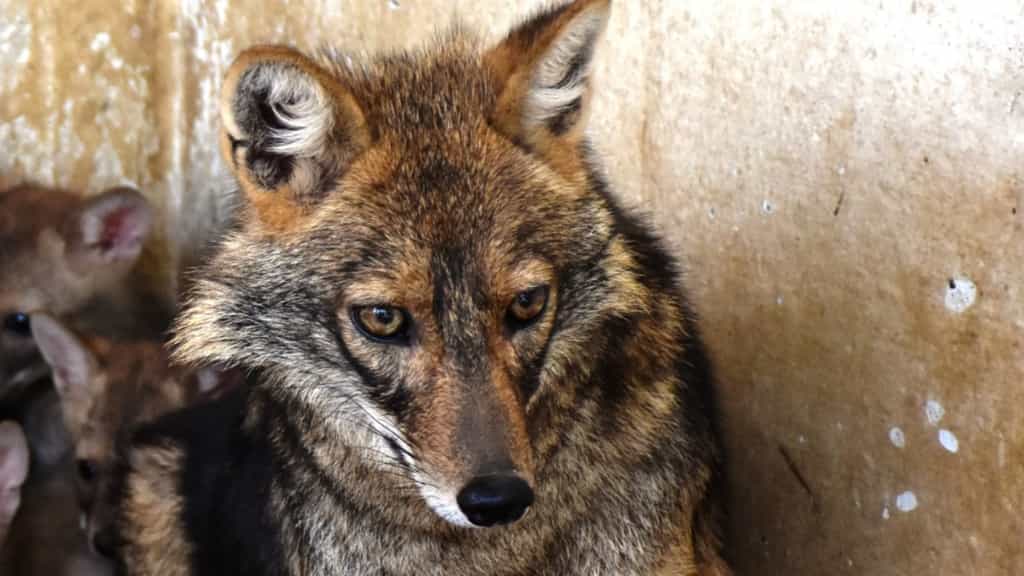
What began as the escape of around four jackals from their enclosure at the National Zoological Park in Delhi last November, followed by assurances that all had been rescued, has now culminated in a probe ordered by the Union Environment Ministry. The inquiry follows a complaint from the National Zoo Workers Union, alleging the unlawful killing of one of these jackals in December.
The species is protected under Schedule 1 of the Wildlife Protection (Amendment) Act, 2022.
In the complaint, submitted to the Ministry of Environment, Forest and Climate Change (MoEFCC) on Monday, the Union has sought an independent inquiry into what it describes as gross violations of the Wildlife (Protection) Act, 1972, the Prevention of Cruelty to Animals Act, 1960, and established protocol governing zoological parks. A team of MOEFCC officials visited the zoo on Tuesday.
The Union has alleged in the complaint that after several jackals were spotted outside their holding area on November 22, one animal later entered Beat No. 4 and jumped into the enclosure of a Himalayan black bear. It has been claimed that instead of following lawful rescue and containment procedures, the ranger in charge allegedly devised a plan to kill the jackal “by burning it alive inside the bear’s burrow”.
As per the complaint, the workers were allegedly summoned and “chilli powder was poured into the burrow and fire was ignited inside it”, resulting in the “unlawful killing” of the animal.
Two days later, the same workers were allegedly sent inside the burrow to retrieve the remains, which were “clandestinely disposed of” without any intimation to zoo veterinary authorities or a mandatory post-mortem examination.
Speaking to The Indian Express, Dr Sanjeet Kumar, Director at the National Zoological Park, said no such incident had been reported internally and maintained that the number of jackals in the exhibit and holding areas continued to match official inventory records. According to the zoo’s annual inventory, as of March 21, it recorded a total of nine jackals: four male, two female and three unsexed individuals.
“One allegation has been received. The Joint Director has been asked to enquire into the allegation,” the Director said.
When contacted by The Indian Express, Joint Director Nair Vishnuraj Narendran said he was currently in Haldwani and would begin the inquiry upon returning to Delhi. “As per the order received, I have been asked to charge the inquiry and will start the process once I am back,” he said.
A senior zoo official, speaking on condition of anonymity, said that despite rescue efforts after the November incident, at least one jackal continued to move around. The official also alleged that the escape itself was the result of serious mismanagement and administrative lapses, and questioned how an internal inquiry could be conducted by zoo officials when, according to the official, those responsible were part of the same administrative structure.
A zoo staff member, pleading anonymity, said tracking jackals is difficult as they create burrows and often remain underground, particularly in shrubby areas with little or no human interference. The search, the staff member said, continued through December, when the alleged incident took place.
On November 22, the jackals escaped through a small gap at the rear end of the enclosure fencing. A search operation was launched, with trap cages installed and animal capture teams deployed along with animal section and security staff. A tranquilisation team was also kept on standby, according to Dr Kumar. “There was no official count because jackals create burrows and remain there. Many times, it is difficult to keep their exact record,” the staff member said.
The staff member, who said they were aware of the events, claimed it was unclear whether the jackal died due to suffocation or burn injuries. “The range officer instructed staffers to send the jackal’s body directly to the incinerator,” the staff member alleged, adding that the officer had been recently assigned the responsibility due to staff shortages.
Editorial Context & Insight
Original analysis and synthesis with multi-source verification
Methodology
This article includes original analysis and synthesis from our editorial team, cross-referenced with multiple primary sources to ensure depth, accuracy, and balanced perspective. All claims are fact-checked and verified before publication.
Primary Source
Verified Source
The Indian Express
Editorial Team
Senior Editor
Shiv Shakti Mishra
Specializes in India coverage
Quality Assurance
Copy Chief
Fact-checking and editorial standards compliance