Amid ongoing civil unrest in Iran, the Indian government on Wednesday issued an advisory for its nationals regarding travel to the Gulf nation.
In a social media post on X, Ministry of External Affairs (MEA) spokesperson Randhir Jaiswal said: “In view of the ongoing developments in Iran, Indian nationals are once again strongly advised to avoid travel to the Islamic Republic of Iran until further notice.”
“MEA’s advisory issued on 5 January 2026 may also be referred to,” the X post added.
The unrest began in Tehran on 28 December, fuelled by growing public frustration over Iran's prolonged economic crisis, and has intensified into more violent confrontations in recent days.
Last week, Iran's Ambassador Mohammad Fathali stated that the situation in Iran is under control, and there is no threat to Indian citizens or interests in the Islamic Republic.
Emphasising that public order is being maintained, the envoy said diplomatic, economic and consular activities are functioning normally.
"I would like to state with full confidence that there is no threat to Indian citizens, like those of other countries residing in Iran," Fathali had told news agency ANI.
The envoy also said the Islamic Republic of Iran recognises peaceful protest and the expression of public demands as legal rights within its democratic system. He noted that Iranian leaders, including the President, have stressed the importance of hearing people's voices through lawful and civil channels.
Iran on Wednesday pledged accelerated legal proceedings for individuals detained during a sweeping surge of demonstrations, following US President Donald Trump’s warning of "very strong action" should the Islamic Republic proceed with executions, as reported by news agency AFP.
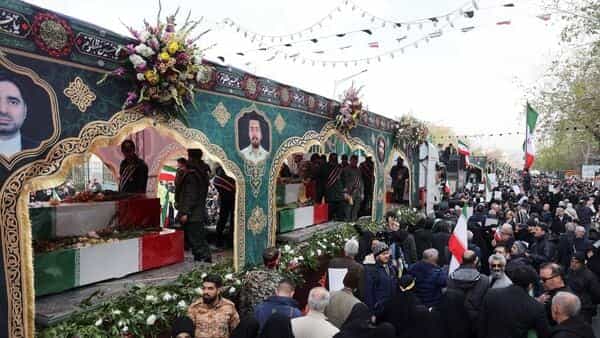
In Tehran, officials conducted a memorial service for more than 100 security personnel and various "martyrs" slain during the unrest, which the government has labelled as "riots" while alleging that participants committed "acts of terror."
The nationwide protest wave, originally ignited by financial hardships, has evolved into a challenge against the religious establishment since its 1979 inception.
Protesters have ignored the administration's total ban on opposition by appearing in rallies throughout the nation, despite claims from the leadership that they have reestablished control.
Iranian media outlets reported judiciary head Gholamhossein Mohseni Ejei stating that the hearings must be open to the public and noted he spent five hours at a Tehran jail reviewing the files.
Ejei said, "If a person burned someone, beheaded someone and set them on fire, then we must do our work quickly."
Editorial Context & Insight
Original analysis and synthesis with multi-source verification
Methodology
This article includes original analysis and synthesis from our editorial team, cross-referenced with multiple primary sources to ensure depth, accuracy, and balanced perspective. All claims are fact-checked and verified before publication.
Primary Source
Verified Source
mint - news
Editorial Team
Senior Editor
James Chen
Specializes in India coverage
Quality Assurance
Associate Editor
Fact-checking and editorial standards compliance