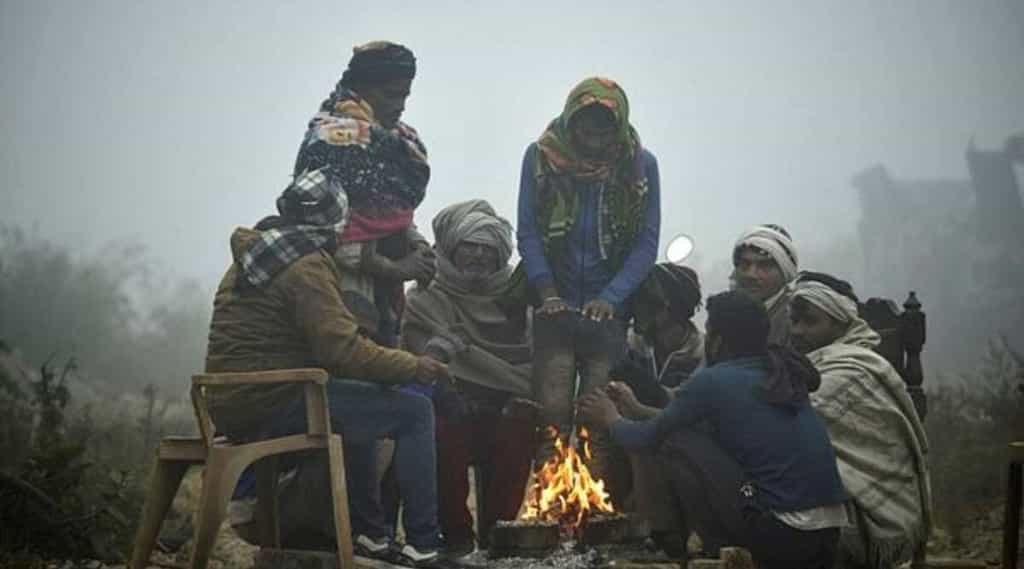
The India Meteorological Department (IMD) on Thursday warned that cold wave conditions, accompanied by dense to very dense fog, especially during night and early morning hours, will continue over the next few days across Punjab and Haryana, keeping large parts of the region under severe winter stress.
According to the forecast, cold wave conditions are likely at isolated places over southern and southwestern Punjab, including Fazilka, Faridkot, Muktsar, Bathinda and Mansa, while cold day conditions may prevail over Amritsar, Jalandhar, Ludhiana, Kapurthala and Patiala in the coming days.
In Haryana, cold wave conditions are expected at isolated places over Mahendragarh, Rewari, Jhajjar, Gurugram, Mewat, Palwal, Sirsa, Fatehabad, Hisar, Bhiwani and Charkhi Dadri, with cold day conditions likely over Ambala, Kurukshetra, Kaithal, Karnal and Jind.
A cold day is defined by the IMD when the maximum temperature departs from normal by – 4.5°C to – 6.4°C, while a severe cold day is declared if the departure is – 6.5°C or lower. A cold wave over plains is declared when the minimum temperature departs from normal by – 4.5°C to – 6.4°C, while a severe cold wave occurs when the departure is – 6.5°C or more
The IMD has also cautioned that dense to very dense fog may affect large parts of Punjab in the coming days, including Amritsar, Tarn Taran, Kapurthala, Jalandhar, Ludhiana, Patiala, Sangrur, Barnala and Fatehgarh Sahib, while dense fog is likely at isolated places across Chandigarh, Panchkula and several districts of Haryana, impacting visibility and transport services.
During the past 24 hours, weather remained dry across Haryana and Punjab. However, cold day to severe cold day conditions were observed at several places, while cold wave conditions occurred at isolated locations, particularly in Haryana.
In Haryana, the average maximum temperature showed no significant change and remained appreciably below normal. The highest maximum temperature was 15.5°C recorded at Bhiwani, while Narnaul recorded the lowest minimum temperature of 4.0°C, where cold wave conditions were reported. Several districts, including Ambala, Hisar, Karnal and Mahendragarh, continued to experience biting cold throughout the day.
In Punjab, maximum temperatures remained markedly below normal by over 5°C, despite a marginal rise. Thein Dam (Pathankot) recorded the highest maximum temperature of 16.3°C, while Bathinda registered the lowest minimum temperature of 5°C. Dense fog was observed at isolated to many places across the state, disrupting normal visibility during early morning hours.
In the Tricity (Chandigarh, Mohali and Panchkula), dense fog during morning hours is expected to continue, with maximum temperatures hovering around 13–14°C and minimum temperatures between 6–7°C, maintaining cold day conditions.
The IMD has cautioned that persistent cold wave, cold day and dense fog conditions may lead to health-related issues, including respiratory ailments, hypothermia and eye irritation. Dense fog is also likely to affect road, rail and air traffic, increasing the risk of delays and accidents.
Residents are advised to limit outdoor exposure during early morning and night hours, wear adequate warm clothing, ensure proper ventilation while using heating devices and exercise caution while driving under foggy conditions.
PTI adds: Freezing cold wave conditions continued in most parts of Himachal Pradesh on Wednesday, with 13 out of the 34 stations reporting sub-zero temperatures, while the mercury hovered around the freezing point in four districts.
Kukumseri was the coldest with a minimum temperature of minus 11.2°C, while Tabo recorded a low of minus 8.9 degrees, followed by Kalpa at minus 3.6°, Solan -1.8°, Narkanda -1.6°and Seobagh -1.5°.
In Manali, the temperature was -1.4°, Bhuntar and Reckongpeo recorded -1.3° each, Kufri -0.8°, Sundernagar -0.6°, Bajaura -0.2°and Palampur was at 0°.
Out of 34 stations, 13 recorded minimum temperatures below zero.
Editorial Context & Insight
Original analysis & verification
Methodology
This article includes original analysis and synthesis from our editorial team, cross-referenced with primary sources to ensure depth and accuracy.
Primary Source
The Indian Express