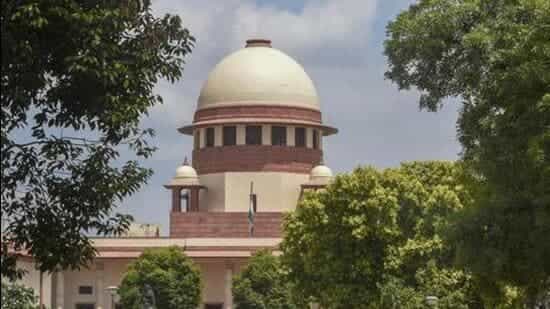
The Supreme Court on Thursday pulled up several states and Union Territories for not disclosing information on private universities, as part of a sweeping audit ordered by the court two months ago, and warned of contempt proceedings against those unrepresented during the hearing.
A bench of justices Ahsanuddin Amanullah and N V Anjaria said, “With regard to compliance, those states which have not filed an affidavit, let an explanation be filed by the chief secretary for not filing an affidavit without seeking any extension of time.” These states included Bihar, Chhattisgarh, Andhra Pradesh, Tamil Nadu, Goa, Odisha, Puducherry, Madhya Pradesh, Telangana and West Bengal. States that agreed to file the affidavit by the end of the day were exempted from the order.
The order further stated, “Let notice be issued to chief secretaries to explain why contempt of court proceedings be not initiated for not ensuring they are represented in court.” These states and UTs included Maharashtra, Delhi, Gujarat, Daman & Diu and Chandigarh.
On November 20, 2025, the court had issued sweeping directions to furnish details related to the establishment, management, and regulation of all universities under various ministries. In addition, states, Union Territories, and the University Grants Commission (UGC) were directed to submit policies on admission and recruitment, and to explain how the ‘no profit, no loss’ approach was being enforced.
When the matter was taken up after about two months, the court noted that, instead of the cabinet secretary, the Union government’s secretary of higher education had filed the affidavit, irking the judges.
“We are surprised as to how the Cabinet Secretary was under a misconception. We do not expect him to be so casual,” said the bench. It asked the Centre to revisit its affidavit, as the earlier order required information on medical, engineering and agricultural universities, as well as others under the administrative control of various ministries.
Solicitor general Tushar Mehta, appearing for the Centre, told the court he would file an application to exempt the cabinet secretary. He said, “Education should not be an industry,” to which the court agreed.
“We are taking this only in public interest. On the next date, we will take all of you into confidence regarding what is going on in our minds,” said the bench. However, the court was informed that several states and UTs remained unrepresented and some had not filed any response.
The bench told lawyers appearing in the matter that since the order’s issuance, it had received numerous letter petitions from individuals with credible proof about certain private universities and their functioning. “We have received about 250 petitions from persons with authentic proof which makes us more confident that some steps have to be taken,” the bench said.
The court directed the chief secretaries of states that failed to appear to show cause why contempt action should not be initiated. States that appeared but did not file affidavits were ordered to submit an explanation, with the provision that if they filed their responses by the end of the day, the order would not apply.
“We require your assistance. We will not act as headmasters admonishing states and will not go into witch-hunting, provided you are honest with us,” the bench added, posting the matter for January 28.
The court’s observations came in a petition filed by a student of Amity University, who alleged harassment after seeking a correction of her name in college records. The court expanded the petition’s scope, issuing nationwide directions to states and UTs to collect information on who runs these universities, the wages paid to staff, and the composition and method of selection in the governing bodies of these institutions.
Editorial Context & Insight
Original analysis & verification
Methodology
This article includes original analysis and synthesis from our editorial team, cross-referenced with primary sources to ensure depth and accuracy.