Brandenburg state premier Dietmar Woidke has declared void his Social Democrats' (SPD) coalition government with the populist left-wing fringe party the BSW.
With that, the only state government in Germany pairing the center left SPD with the socialist splinter party known in German as the Sahra Wagenknecht Alliance has disintegrated.
Several BSW politicians leaving the party, complaining of extremist tendencies within its ranks, put the coalition's razor-thin majority into question.
As a result of this, Woidke had issued repeated appeals to the remaining BSW politicians to declare their support for the coalition. With these guarantees not forthcoming, and more resignations rendering the coalition a minority force in state parliament anyway, Woidke declared the alliance history late on Tuesday morning.
"With this collapse of the [BSW] faction, the basis for cooperation in a coalition, the basis for working with a democratic majority is no longer available," Woidke said. "Therefore, for me the basis of the coalition agreement is also expired."
Woidke said that on a de facto basis in the immediate term, his SPD would lead a minority government. He said he would seek talks with the center-right CDU about a potential alliance.
Brandenburg last voted in state elections in late 2024. This was at more or less the height of popularity for the BSW, a splinter group formed by former socialist Left Party high-flyer Sandra Wagenknecht.
It sought to combine left-leaning policies on economic issues and criticism of support for Ukraine and a friendly line towards Russia with a tougher stance on migration.
Particularly popular in the former East, the BSW claimed 13.5% of the vote in Brandenburg in September 2024, but it narrowly failed to clear the 5% hurdle required to guarantee representation in the Bundestag in 2025's national vote.
A mini-resurgence for the Left Party that Wagenknecht had abandoned helped explain the BSW declining almost as swiftly as it had risen.
Should Woidke and other parties in Brandenburg fail to broker a new working coalition, early state elections could be a possibility. The state is a stronghold for the AfD, which at 29.2% support came very close to eclipsing the SPD, on 30.9%, as the state's largest party in 2024.
Highlights from Chancellor Friedrich Merz's letter to coalition parliamentarians at the start of 2026, dated Sunday, have found their way into German media on Tuesday.
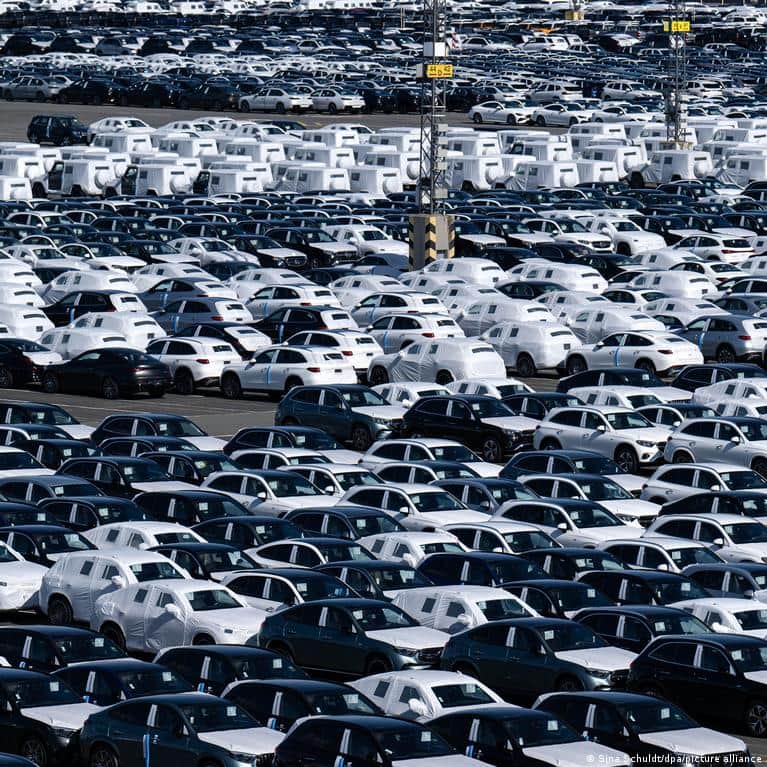
Most lead with his stark warnings on the business climate in the country.
"The situation of German industry is very critical in some branches," Merz warned in the letter.
"Industry giants as well as considerable numbers of mid-sized and small businesses are facing major challenges, in many companies jobs are being lost."
Merz wrote that as a result of this, the coalition will "have to concentrate on making the right political and legal decisions to drastically improve the economic conditions."
Merz wrote that it had become clear that productivity in Germany was "no longer good enough" amid "changed global economic conditions."
"Labor costs, energy costs, bureaucratic hurdles and tax burdens are all too high," he said. "We will need to work on this together."
The chancellor's appeal might be aimed in particular at his center left allies, the Social Democrats, which tend to have slightly different economic priorities to Merz's Christian Democrats.
The coalition spent the back end of 2025 struggling or indeed failing to agree on some core economic policy reforms.
To view this video please enable JavaScript, and consider upgrading to a web browser that supports HTML5 video
Heating and electricity supply remained patchy in parts of southwestern Berlin on Tuesday, the fourth day following a sabotage of high-voltage cables leading to a power station in what authorities in the capital believe was a fire set by left-wing militants.
Around 45,000 households and 2,200 businesses were initially cut off in the Saturday morning attack on the cables, which was claimed by a left-wing extremist group.
According to the Stromnetz Berlin operator, around 19,500 households and 1,000 businesses are back online, but it may take until Thursday to get everyone back on the grid.
Key facilities like hospitals, which briefly had to rely on generators for power, are back online, while 72 of 74 affected care homes are also being supplied again, Stromnetz Berlin said.
Temperatures in Berlin, no stranger to harsh winters, have been at or below freezing more or less consistently since Saturday's sabotage.
Hello and welcome to our German news updates for January 6, 2026.
Much of the country, from north to south and east to west, awoke to at least a smattering of snow and temperatures around freezing point on Tuesday.
It might be ideal weather for the Siberian mountain goats at the Berlin Zoological Gardens, but for city authorities and thousands of residents facing a fourth day of power outages after sabotage, conditions could be better.
Meanwhile, Chancellor Friedrich Merz's start-of-year letter to politicians in his coalition is doing the rounds in the media, and leads with a stark warning on the state of some core businesses in the country.
And in Brandenburg, the state coalition government is unraveling.
This is a byproduct of the disintegration of the far-left Sahra Wagenkencht Alliance (BSW) party, that's already looking rather less relevant now than it did when the state last voted in September 2024.
Stick around for more on these stories, new inflation figures expected early in the afternoon, and anything else of interest developing in Germany in the course of the day.
Editorial Context & Insight
Original analysis & verification
Methodology
This article includes original analysis and synthesis from our editorial team, cross-referenced with primary sources to ensure depth and accuracy.
Primary Source
Deutsche Welle