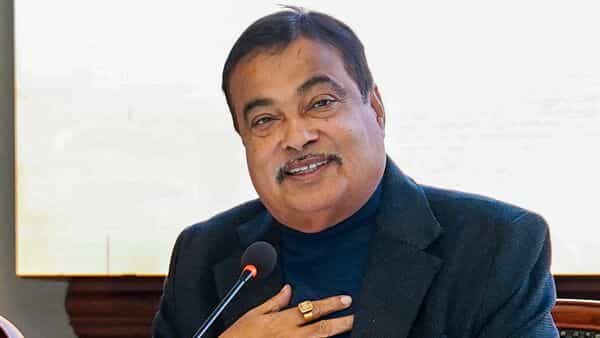
Road accident victims will be entitled to prompt medical care under a new healthcare scheme that mandates cashless treatment at designated hospitals even for the uninsured, road transport and highways minister Nitin Gadkari said on Thursday.
The scheme, being developed by the Union ministry of road transport and highways (MoRTH), will be announced by Prime Minister Narendra Modi soon, he said.
“The new scheme would provide cashless treatment to all road accidents (national highways and state roads) at designated hospitals, and will offer the cover even to victims of uninsured vehicles so that immediate medical attention is not denied in the golden hour that helps save lives,” Gadkari told reporters in the national capital after meeting transport ministers of states and Union territories.
The so-called golden hour refers to the first hour immediately after a road accident or serious injury, when prompt medical treatment can potentially save lives.
Gadkari said that the scheme's nationwide rollout will follow successful pilots launched earlier in Assam, Chandigarh, Uttarakhand, Haryana, Punjab, Uttar Pradesh and Puducherry.
The scheme will provide cashless treatment of up to ₹1.5 lakh per accident per person. It will cover hospitalization for up to seven days from the date of the accident at all hospitals listed in the government’s Ayushman Bharat health insurance scheme.
Under the scheme, insurance firms that provide third-party cover to vehicles will contribute about 1% of the premium to a common fund that will be used to provide cashless treatment to road accident victims. In addition, under the Rah-Veer scheme, the Centre reimburses states and Union territories for rewarding “Good Samaritans” with ₹25,000 for helping accident victims reach hospitals quickly and receive timely treatment.
Gadkari said that the move to provide cashless treatment for accident victims is part of a larger effort by the ministry to reduce road fatalities and quicken post-accident emergency response. Government data shows that around 500,000 accidents took place on Indian roads last year, leading to more than 180,000 deaths—the highest globally.
As part of the initiative to make Indian roads safer, the MoRTH also plans to make the use of vehicle-to-vehicle (V2V) communication mandatory on all four-wheelers in the country. Vehicles can communicate with each other using short-range radio signals without relying on mobile networks or the internet, MoRTH secretary V. Umashankar said.
This is expected to improve road safety by allowing vehicles to warn each other about dangers such as heavy fog, blind spots, stationary vehicles, or traffic pile-ups caused by accidents, giving drivers early alerts to slow down or stop.
“A joint task force has been formed with the Department of Telecommunications (DoT), which has agreed in principle to allocate 30 megahertz (MHz) spectrum in 5.875-5.905 gigahertz band for this purpose. The V2V system itself will cost ₹5,000-7,000 for auto companies to install. We are finishing the guidelines for use of this system and notify its mandatory use this year itself for new cars initially," Umashankar said.
The use of the system in older cars will also be facilitated in a phased manner, he added.
The Centre also plans to tighten bus body code following a spate of fatal accidents. Gadkari said that the move to tighten the bus body code follows concerns over poor bus design and the use of substandard materials. Lately, the country has seen six major bus accidents in the last three months, resulting in 145 deaths.
Bus body code is a set of government standards that regulates how buses are built to ensure they are safe.
The revised norms, he said, will mandate all manufacturers to obtain type approval from authorized testing agencies, replacing the earlier self-certification system followed by manual bus body builders.
Besides, the Centre will pursue a broader policy push to strengthen the road transport regulatory framework through institutionalized forensic crash investigations. As part of the forensic crash investigation framework, sleeper coach buses will now be permitted to be manufactured only by automobile companies, while bus manufacturing facilities will be accredited by the Central government. Meanwhile, existing buses will be required to be retrofitted with safety features such as fire detection systems, emergency exits with hammers, emergency lighting and driver drowsiness indicators.
The government is also preparing to place a set of proposed amendments to the Motor Vehicles Act before Parliament in the coming session. A total of 61 amendments have been drafted, focusing on road safety, ease of doing business, citizen services, improved regulations, mobility, emission norms, simplified definitions and harmonization with global standards.
Gadkari also reviewed progress under the new driving training policy launched in January 2025 during the meeting with state and Union territory transport ministers. States were briefed on the implementation of Bharat New Car Assessment Programme (BNCAP) 2.0—India's official vehicle safety rating system—and the planned introduction of advanced driver assistance systems in trucks and buses.
Editorial Context & Insight
Original analysis & verification
Methodology
This article includes original analysis and synthesis from our editorial team, cross-referenced with primary sources to ensure depth and accuracy.
Primary Source
mint - news