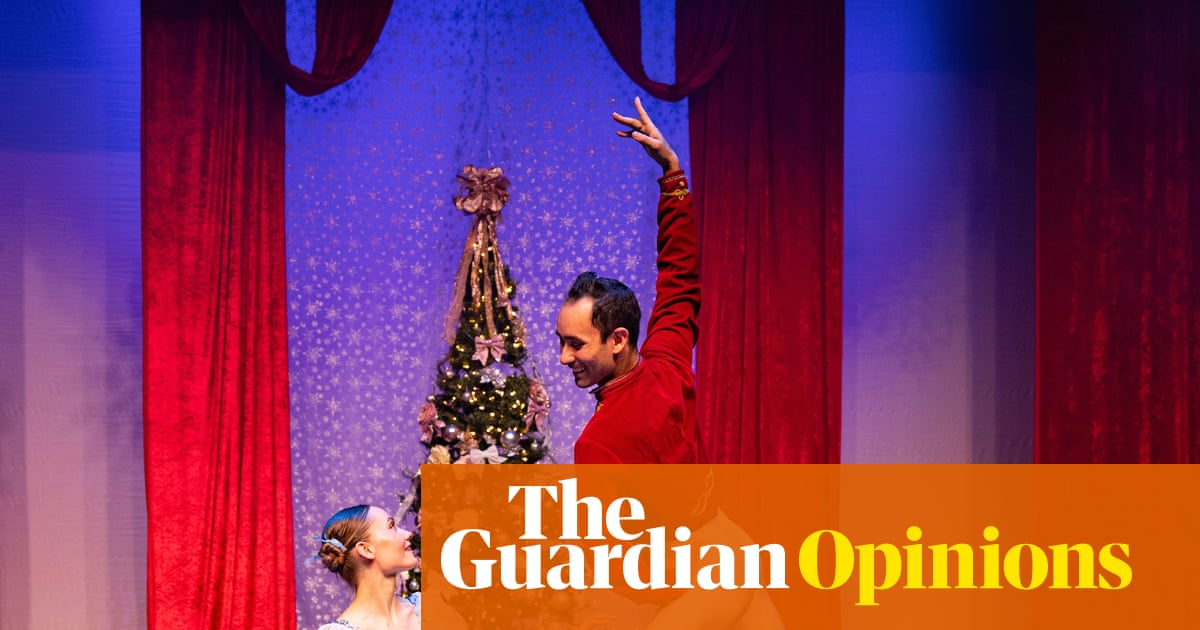
One of the great joys of Christmas for me has been being able to share my love of The Nutcracker with my son. Last year, I took him to see a child-friendly version by the Let’s All Dance ballet company. The look of wonderment and recognition on his face when the music started up is a memory that I’ll treasure for ever.
I’ll confess that the idea of taking a then two-year-old to a ballet had struck me as faintly ridiculous, one of those painfully middle-class-coded things I find myself doing as a parent (see also Mini Mozart). That kind of thinking, though, is in itself elitist, because who says ballet, or classical music, should be only for rarefied audiences? The popularity of The Nutcracker, not to mention shows such as The Snowman, which has been running at London’s Peacock theatre for 28 years, is testament to how children respond joyfully, and instinctively, to dance.
They are also natural dancers themselves. Walking past a school playground recently, I saw a crowd of four- and five-year-olds dancing to Is This Love by Bob Marley and the Wailers with their teacher. The way they jumped and twirled so unselfconciously was beautiful to see.
Against a backdrop of cuts to arts funding, though, children are being deprived of the chance to learn more about the dance that comes so naturally to them, whether that’s doing it or watching it. When schools don’t offer dance – and many don’t – this adds a further barrier, especially to pupils from deprived backgrounds who may not have access to the cultural sphere outside school time. A 2023 Ofsted report on physical education noted: “Many schools do not match the ambition of the national curriculum. In two-thirds of the schools, dance is not taught to all pupils, or the dance content being taught is not well organised.”
That’s why the work of companies such as Let’s All Dance is so important. “Yesterday we held a relaxed performance for some children with special needs in Banbury,” says Orit Sutton, the artistic director. “They were free to come and go as they wished but they didn’t budge for the whole show! They were all totally engrossed and then clapped and cheered at the end … It was incredibly moving and really proves that live, professional ballet should be accessible to everyone, not just an elite, wealthy few.” (To underline this ethos, some of their tickets for The Nutcracker in December 2025 cost as little as £10, and you can also donate tickets to children from low-income families.)
It’s easy to feel depressed about access to and funding of the arts, but there is so much hope to be found. London dance space The Place – which is showing The Magic Flute this Christmas – has worked with more than 4,000 children from Camden primary schools to let them experience dance as participants, audience and creators, and they do an annual playground tour as well. In a video about The Place’s Camden Partner Schools programme, creative learning producer Maria Ryan says: “We have had feedback from teachers who tell us that the children are more focused in class, they can concentrate better, they work better together, they communicate better, and they are more confident in their own abilities – and dance really can encourage all of these developmental processes.”
Being in London has huge advantages when it comes to children’s interaction with the cultural sector, but there are similar initiatives elsewhere. Suffolk’s DanceEast also works with schoolchildren, including those in rural primaries in key stages one and two, through an initiative called Digital Primaries that allows them to livestream regular science and PSHE sessions taught through dance. And in the north-west of England, Cheshire Dance delivers cross-curricular dance projects to schools.
It was announced in the summer that the Department for Education is to continue funding student bursaries for the National Centres for Advanced Training in Dance, a scheme that delivers pre-vocational dance training to 10- to 18-year-olds in 10 dance centres across England on the basis that a career in dance should be accessible to everyone, regardless of their background. The outreach portion of their grant funding has been cut, and it was feared that the centres would be forced to close.
The big hope is that, after years and years of arts funding cuts and changes to the curriculum, the Labour government will be more committed to creative education in all its forms. The November 2025 curriculum report does show a much better recognition of dance as more than a simple physical activity, but as a “creative discipline”, the teaching of which should involve aspects such as choreography and performance. There are encouraging signs throughout the report that creative subjects are to be made a lot more important.
A favourite print I have on my wall is of a lino cut by the artist Roger Zogolovitch. It shows people blissfully dancing, and the words: “Dance is dreaming with your body. Dance is the hidden language of the soul.” I love it because it captures that very human impulse to express ourselves using movement, regardless of whether it’s in the club, the school playground, or on stage at the ballet.