
Key takeaways
- Economists and AI leaders warn that the window to prepare for AI’s economic impact is closing, emphasizing the need for urgent action to…
- More than 200 economists and AI researchers are calling for immediate action in a joint statement.
- The statement is titled "We Must Act Now" and was coordinated by the Stanford Digital Economy Lab.
What happened
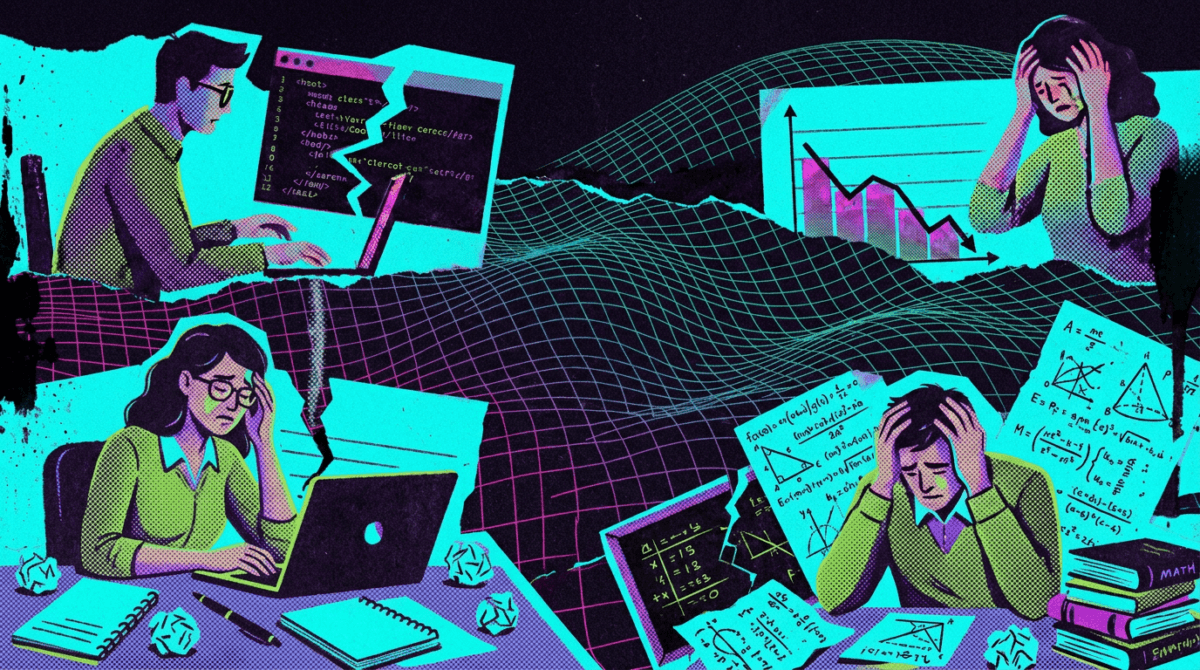
More than 200 economists and AI researchers are calling for immediate action in a joint statement. The economic transformation driven by AI could be unprecedented, but the window to prepare is narrow.
Nobel laureate Michael Spence of New York University called for an "all hands on deck" approach given the uncertainty about the scale and timing of the effects. Tom Cunningham of the research organization METR put it more bluntly. "We are driving in fog, and it is extraordinarily difficult to anticipate what will happen next."
The authors could hardly have picked a better moment to publish. Just over the weekend, OpenAI CEO Sam Altman said he was "pretty sure" that AI has been a net job creator so far. Anthropic CEO Dario Amodei also recently described automation more as a productivity multiplier than a job killer. A basic problem is that no established methods exist yet to measure potential productivity gains from AI.
Studies showing a significant effect of AI on the labor market as a whole don't exist yet. A more recent study from the Federal Reserve Board found that US programmer job growth nearly halved since ChatGPT launched, with roughly 500,000 fewer jobs than expected over three years, though the authors caution against reading that as a straight count of lost positions.
An earlier study by several US universities found that the job crisis for programmers and writers began in early 2022, months before ChatGPT launched. The Yale Budget Lab also found no AI-driven changes in the labor market so far.
Why it matters
The statement is titled "We Must Act Now" and was coordinated by the Stanford Digital Economy Lab. Its core argument boils down to three claims: AI could become "radically more powerful" over the next decade. That could trigger a transformation "larger than the Industrial Revolution, but unfolding over a vastly shorter time frame." Economists, policymakers, and technology leaders need to act now to create incentives, guardrails, and institutions.
The list of signatories includes Nobel laureates in economics such as Daron Acemoglu, Joseph Stiglitz, Paul Krugman, and Ben Bernanke, alongside representatives of major AI companies. Jeff Dean of Google, Anthropic co-founder Jack Clark, OpenAI's Noam Brown and Sarah Friar, and Wojciech Zaremba of the OpenAI Foundation all signed on.
"AI capabilities are advancing far faster than our understanding of the economic implications. In that gap lie the greatest opportunities of our era," Brynjolfsson wrote, according to the Stanford Digital Economy Lab's press release. He said action is needed now so that AI "creates prosperity for the many, not just the few."
The statement explicitly warns of "large-scale job displacement" as one of the risks, but also sees "major gains in living standards" as a potential upside. Throughout, it stays in conditional language. AI "may" become radically more capable. It "could" trigger an unprecedented transformation, and it "could" cost jobs. The paper doesn't name specific policy measures or timelines.
What to watch
Deepmind CEO Demis Hassabis didn't comment explicitly on job losses but said in April the arrival of artificial general intelligence (AGI) would be equivalent to "10 times the industrial revolution at 10 times the speed." A system like that could emerge within the next five years. Hassabis, who is also a Nobel laureate, is not one of the signatories.