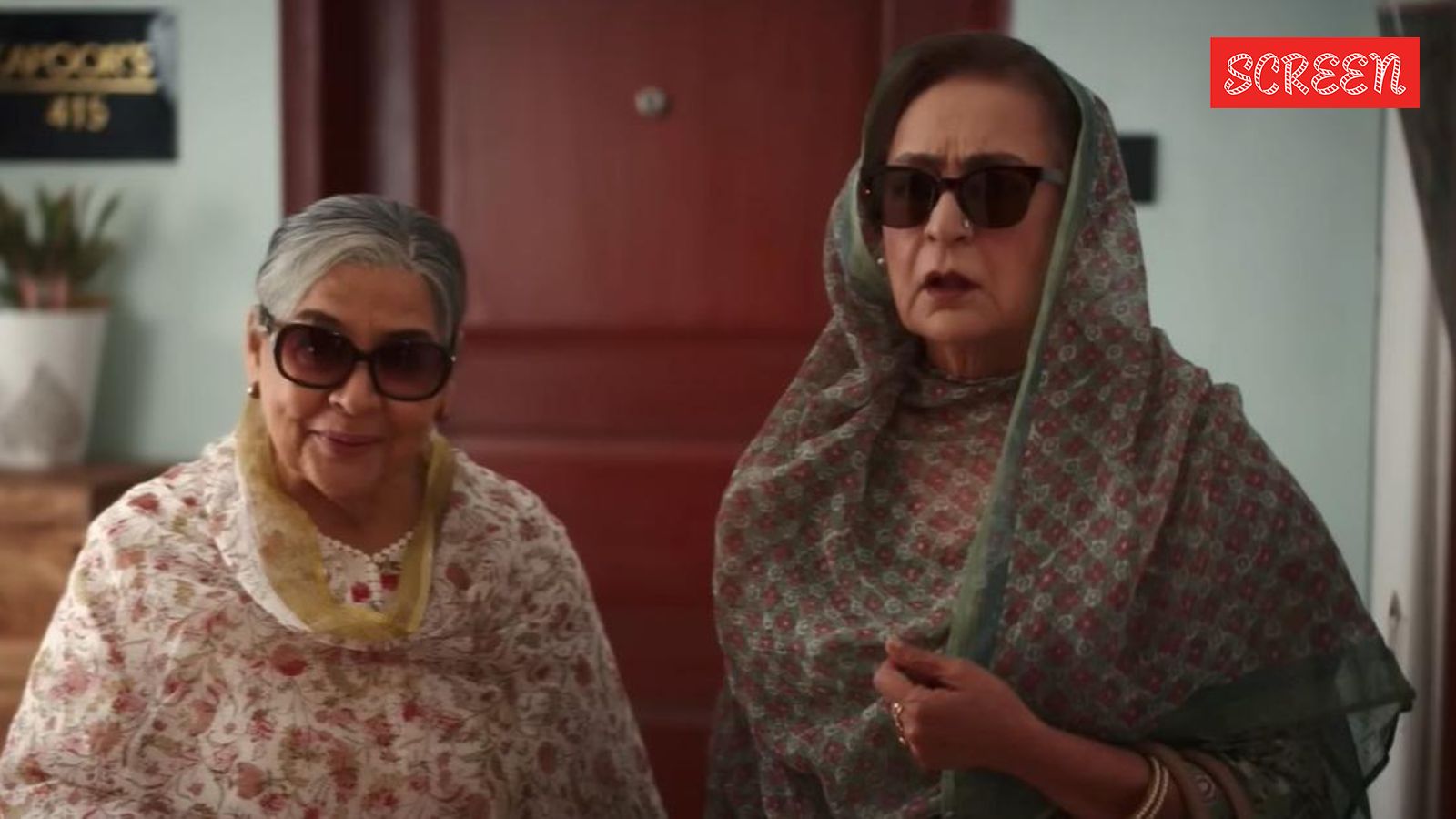
The absence of a heroic male figure is striking. Resolutions are negotiated almost entirely by women
The Great Shamsuddin Family opens inside a modest Delhi apartment, where Bani, a writer and a divorced Muslim woman, sits on her living room couch trying to finish an application that could take her out of the country. The proposal is half-written with the deadline 12 hours away. The room feels hers, briefly, until the phone rings. Her mother calls for her passport, and then her cousins and aunts come to her doorstep, and after that, the doorbell refuses to stay quiet. The day has not even properly begun for Bani, but her solitude and the plan to complete her proposal have already collapsed. The interruptions are familiar to anyone who has tried to seek solitude in an Indian household. But in this film, every interruption carries a weight that goes beyond inconvenience. Anusha Rizvi lets the film unfold patiently. She allows the conversations to overlap, anxieties to simmer, and humour to surface almost accidentally.
Every one of Bani’s family members brings their own emergency. Her cousin, Iram, needs help depositing a large sum of cash that she received as mehr (alimony) after a divorce. She needs to deposit the money in the bank before her mother, Nabeela, realises that the same amount of money was illegally withdrawn from the latter’s account with the help of a forged signature and was invested in a business deal that is already collapsing.
While matters related to money are taken care of, Bani’s mother, Asiya and her older sister, Akko, show up with an impromptu plan to go to Umrah. In the meantime, Bani’s cousin Zohaib arrives with his Hindu partner Pallavi, with whom he has eloped. Adding to all this chaos is Bani’s friend Amitav, an academician, armed with liberal self-assurance that quickly reveals its own prejudices.
None of these plots is sensational in itself. But it shows how fear seeps into otherwise simple decisions. Love jihad laws are never mentioned, nor are slogans shouted on screen. Yet the presence of the mob is constant, hovering like background noise. When Pallavi’s phone rings every now and then — “Papa calling,” “Mummy calling,” — it feels less like familial concern and more like an alarm bell. A reminder of the world beyond the room.
The film’s humour emerges from these frictions. It is situational, sharp, and often uncomfortable. You laugh but then stop because you recognise the cost of that laughter. It mocks nothing except the illusion that life can be neatly categorised into genres when fear is a daily companion.
Parallelly, from Bani’s perspective, there is another narrative running quietly beneath the chaos, a question the film never answers outright: What does it mean to want to leave? Her desire to move abroad is not framed as betrayal or ambition alone. It is exhaustion. The weight of constantly explaining, adjusting, accommodating, and fearing has become too heavy.
The Great Shamsuddin Family is careful not to ask for sympathy. It asks for attention. By keeping the story confined to one house and one day, Rizvi shows how national politics infiltrate domestic life. The family dynamics may resemble those of any other household — arguments over money, marriage, and morality — but the consequences of those arguments are not evenly distributed.
The writer is a trainee at The Indian Express. anusree.kc@expressindia.com