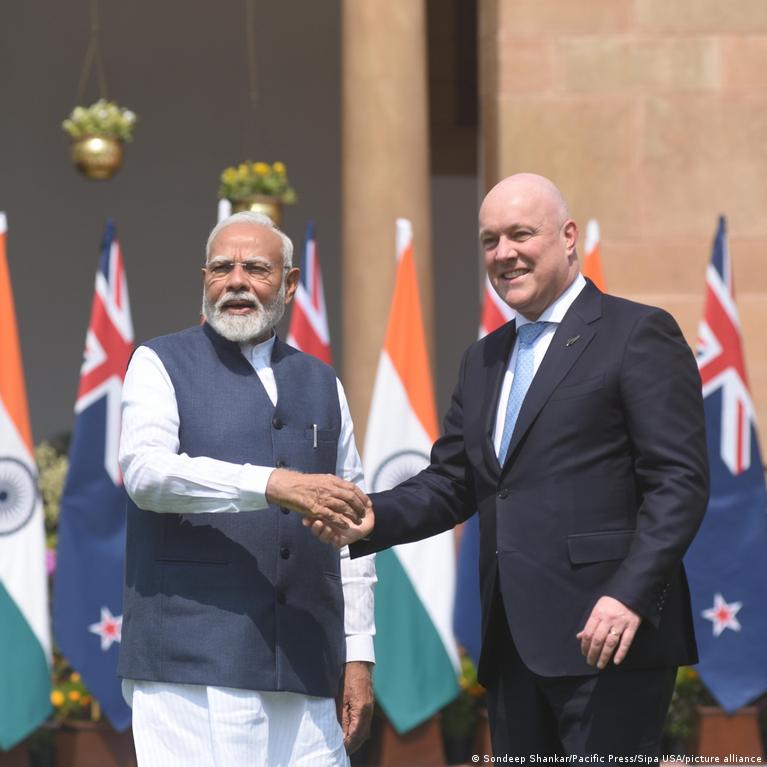
India and New Zealand finalized a major free-trade agreement on Monday, aiming to eliminate or reduce tariffs on some 95% of New Zealand's exports to India and give India tariff-free access to New Zealand's markets. New Zealand has also pledged to invest a further $20 billion (€17 billion) in India over the next 15 years.
"India is the world's most populous country and is the fastest-growing big economy, and that creates opportunities for jobs for Kiwis, exports and growth," said New Zealand Prime Minister Christopher Luxon.
He described the benefits of the plan as "wide-ranging and significant."
In 2024, trade between the two totaled $1.8 billion (€1.5 billion) — with pharmaceuticals from India and forestry and agricultural products from New Zealand making out the bulk of the goods.
The deal was concluded in just nine months, with Indian Prime Minister Narendra Modi praising it as a "historic milestone" in a social media post.
For New Zealand exporters, the deal will facilitate trade in items such as wood, coal, sheep wool and others, while Indian businesses will see benefits for clothing, footwear, and leather, as well as engineering goods and marine products.
However, India will maintain entry barriers on many of New Zealand's dairy and agricultural products in an effort to protect India's domestic producers. These will include milk, cream, whey, yoghurt, and cheese, but also goat meat, onions and almonds.
Wellington's trade minister, Todd McClay, said the deal gives New Zealand more access to India's markets than any other country: "New Zealand is the first country to secure any access for apples and honey into India in an FTA. We have secured the best access for kiwi fruit into India of any country in the world."
India's trade minister said the agreement demonstrates India's "rapidly expanding" trade relations with countries that complement its economy rather than compete with it.
The deal is the third major trade agreement that New Delhi has signed this year as it weathers 50% US tariffs on its exports. Prior deals were struck with Oman and the UK. New Delhi hopes to pen trade deals with the EU, Chile and Canada soon.
To view this video please enable JavaScript, and consider upgrading to a web browser that supports HTML5 video
New Zealand says it expects both sides to sign the deal in the first half of 2026. This, however, might prove difficult for the government in Wellington as it seeks support from its coalition partners at New Zealand First, a far-right populist party.
NZ First leader Winston Peters has vowed his party's eight representatives will vote against the deal in the 123-seat parliament, saying it, "gives too much away, especially on immigration, and does not get enough in return for New Zealanders, including on dairy."