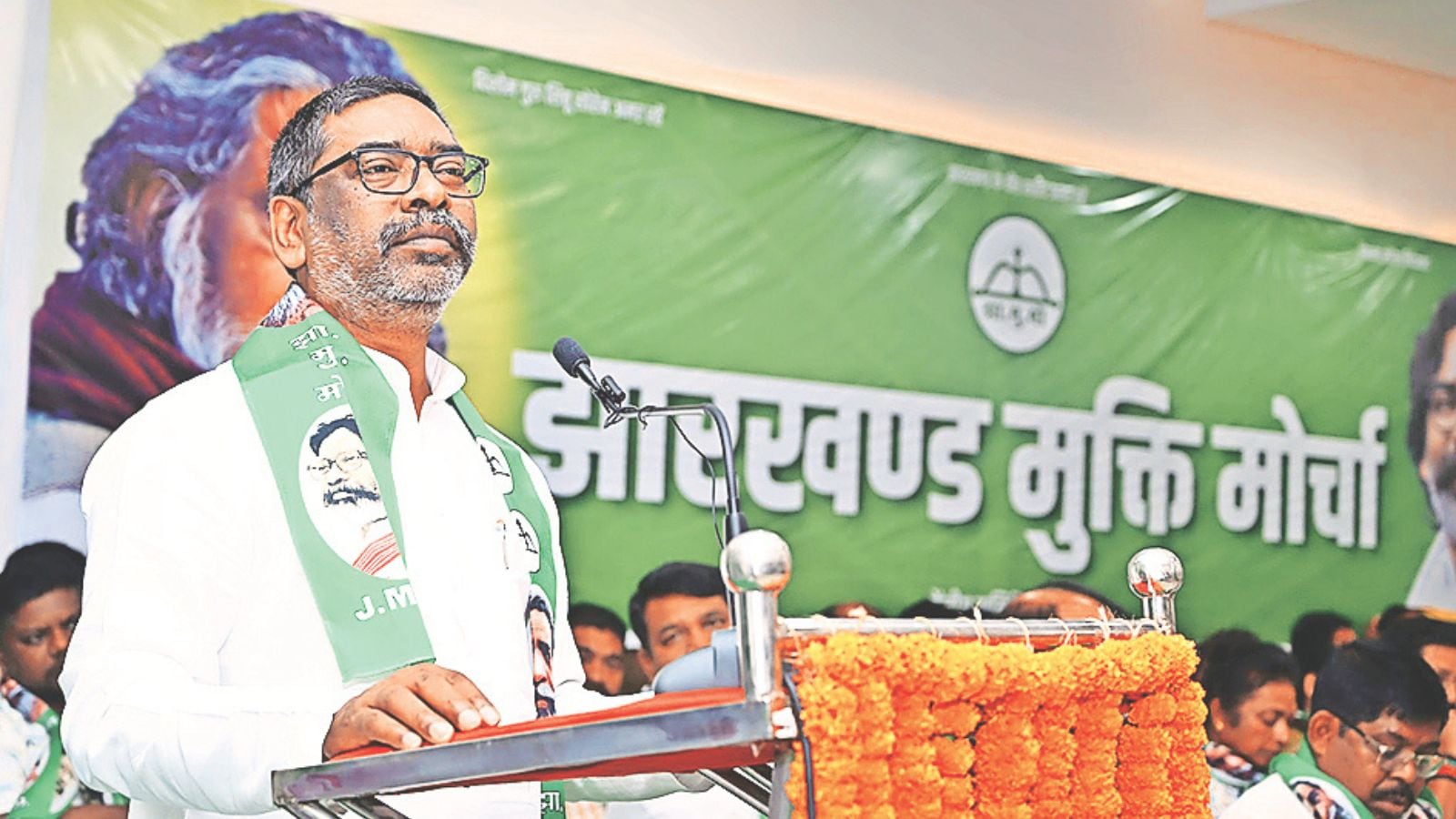
According to the details submitted to the EC, 188 donors contributed to JMM. (Express File Photo)
In the first year after the Supreme Court quashed the government’s electoral bonds scheme, the Jharkhand Mukti Morcha (JMM)’s declared donations in 2024–25 rose sharply, growing by 174% to Rs 33.2 crore from around Rs 12.1 crore in 2023-24.
The surge in the JMM’s donations, largely due to contributions from corporates, came in the midst of the November 2024 Jharkhand Assembly elections in which the incumbent party-led INDIA alliance returned to power by registering a resounding win.
From electoral trusts to companies and individuals, in a series of articles The Indian Express examines the funding sources of political parties as mentioned in their contribution reports submitted to the Election Commission (EC).
According to the JMM’s contribution details for 2024-25 submitted to the EC, 188 donors contributed a total of Rs 33.2 crore to the party led by Chief Minister Hemant Soren. Out of this, Rs 24.4 crore or about 74% came from corporate donors, while individual contributors accounted for Rs 6.7 crore or 20%.
Among the significant contributions from individual donors were Rs 1.98 crore from Shiv Kumar Tiwari and Rs 99.7 lakh from Jai Mangal Singh.
The JMM also received Rs 2 crore from the AB General Electoral Trust, which made up the remaining 6% of its total donations. In the previous financial year, nearly half of the JMM’s funding had come through electoral bonds.
For 2024-25, Vedanta Limited, a mining conglomerate, emerged as the single largest donor to the JMM, contributing Rs 20 crore to it. Other major corporate donors to the party included Fagu Jai Mangal Infra and Global Steel Structures Private Ltd, which contributed Rs 1.9 crore and Rs 50 lakh respectively.
An analysis of donor locations shows that contributions came to the JMM from multiple states across the country, with Maharashtra accounting for the largest share of both corporate and individual donors. It was followed by West Bengal with Jharkhand ranking third with regard to the origin of funds.
Sector wise, more than half of the total donations were made to the JMM by firms from the field of infrastructure and construction. These were followed by companies operating in steel and iron manufacturing, as well as mining and metals – sectors that have a significant presence in the economy of mineral-rich Jharkhand.
Apart from the high-value corporate donations, the JMM’s disclosures to the EC also list contributions from individual donors, many of whom made relatively smaller contributions compared to corporates, but together accounted for one-fifth of the party’s total funding in 2024–25.
Speaking to The Indian Express, JMM leader Vinod Pandey said the JMM has continued to rely primarily on the “strength and commitment of party workers who form both its capital and power”. “Through these grassroots members, the JMM carries out all its activities, which make its operations fundamentally different from national parties like the BJP, which have a more organised approach and have access to far larger funding. Even a glance at JMM’s accounts reflects this model, highlighting the party’s dependence on small contributions and active participation from its base,” he said.
Asked about the surge in the party’s funding compared to last year, the JMM leader attributed it to the “targeted membership drives and active engagement of party workers” across the state.
Pandey said that while the JMM’s corporate donations have grown this year, especially during the election period, the party’s core strategy continues to focus on grassroots support rather than reliance on industrialists or large corporate houses.