As a possible reunion of estranged Thackeray cousins ahead of the Brihanmumbai Municipal Corporation (BMC) elections looms, the BJP is treading cautiously around Marathi asmita, a factor that has helped the Shiv Sena retain control of the country’s richest civic body for nearly three decades.
While Chief Minister Devendra Fadnavis has publicly dismissed concerns over any adverse impact of a Uddhav Thackeray–Raj Thackeray alliance, BJP strategists are, behind closed doors, working on ways to counter a potential Shiv Sena (UBT)-MNS campaign centred on the “sons of the soil” plank.
The BJP believes any attempt to mobilise the Marathi Manoos could prove critical. With nearly 26 per cent of Mumbai’s electorate being Marathi-speaking, the party knows wresting power from Shiv Sena (UBT) will not be easy.
The party maintains its development plank will override regional, caste and emotive considerations. Its confidence stems from inroads among non-Marathi voters — particularly North Indians and Gujaratis — who together make up around 30–35 per cent of the electorate.
However, BJP leaders concede the average 11 per cent Muslim vote bank is likely to go against it.
The undivided Shiv Sena, founded on June 19, 1966, was built on Marathi asmita. Bal Thackeray formed the party to fight what he termed injustice to sons of the soil by non-Marathis. Initially targeting people from southern India, the party later focused on North Indian migrants as it expanded across Maharashtra.
Despite strategic shifts over decades, the Marathi plank remained central. The legacy of the Samyukta Maharashtra Movement (1956–60), which fought to retain Mumbai within Maharashtra on linguistic grounds, also shaped the party’s early politics.
On Tuesday, BJP minister and former Mumbai BJP president Ashish Shelar attacked the Thackerays, asking, “What have you done for Marathi Manoos? In the 25 years rule in BMC, Uddhav Thackeray’s party has inducted in corruption. It is responsible for driving away Marathis away from city. It has killed Marathis.”
His remarks came a day after the State Election Commission announced polls for 29 municipal corporations, including the BMC, on January 15.
On Monday, unsigned posters appealing to Marathi-speaking residents appeared across Mumbai, especially in areas such as Girgaon and Dadar. One poster read, “Marathi people, wake up, the night is stormy. This is a fight for your very existence,” while another said, “Wake up Marathi people, Save Mumbai.”
Sena (UBT) leader Sanjay Raut said on Tuesday, “Soon the Thackeray brothers will announce formal union and poll plans. We will not allow Mumbai to go into hands of Narendra Modi and Amit Shah.”
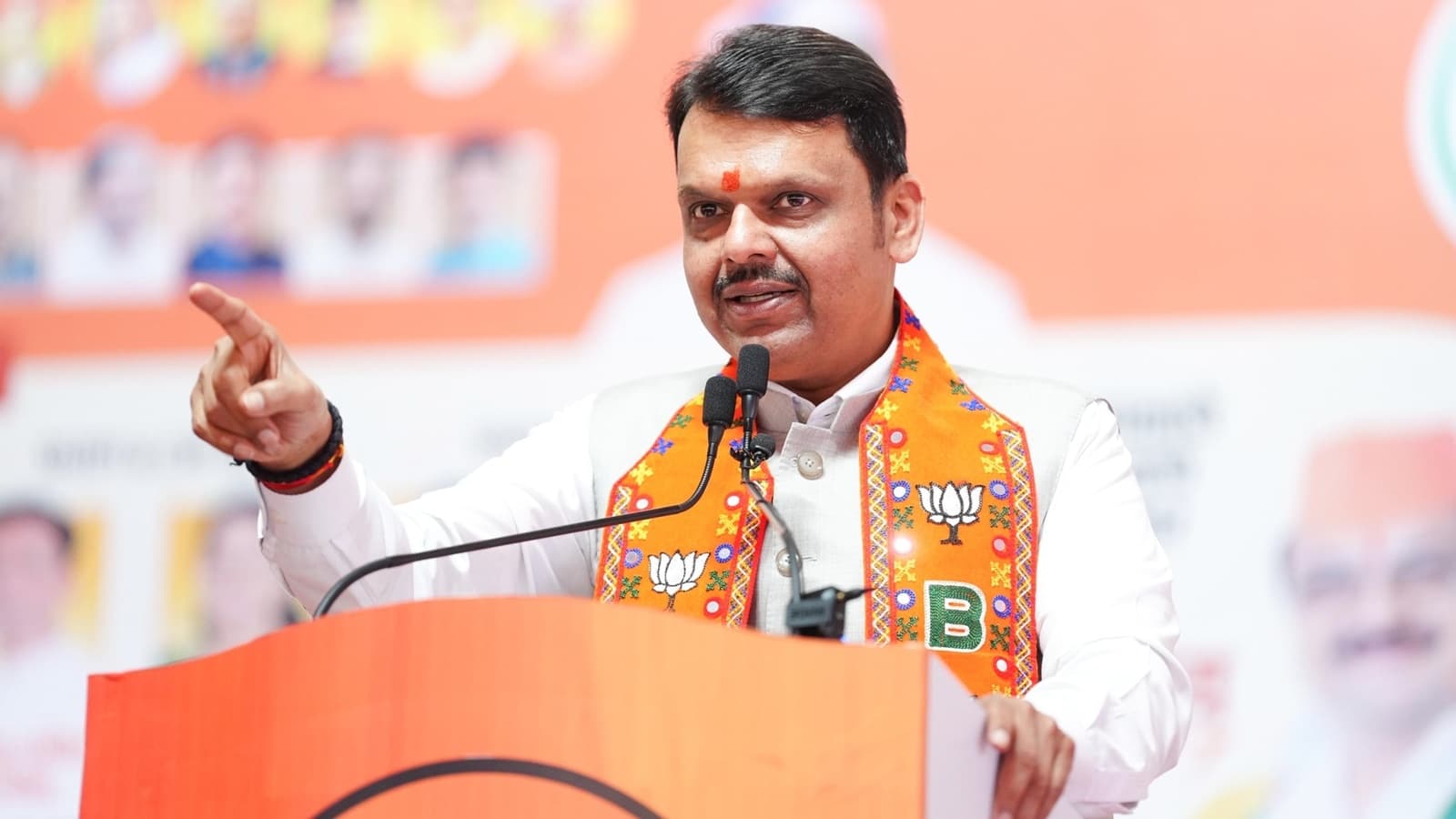
Downplaying the impact of a Thackeray reunion, Fadnavis said, “We are confidence of success in local body elections including BMC. We will have a Mahayuti Mayor in BMC.” He added, “Even if Uddhav and Raj Thackeray come together or not it will not have any impact on the BJP.”
For the BJP, the BMC polls carry high stakes. Since its formation in 1980, the party has never had its own mayor in the civic body, even during long alliances with the undivided Shiv Sena.
The 2017 polls marked a breakthrough when the BJP won 82 seats, just two short of the Sena’s 84, compared to 33 seats in 2012.
Highlighting Mumbai’s importance, Fadnavis has pointed to infrastructure projects undertaken since 2014. “Under BJP government at centre and state 2014 onwards, Mumbai transformation process gained momentum with mega infrastructure projects,” he said.
Uddhav Thackeray, however, accused the BJP-led Centre of undermining Mumbai. “The BJP’s game plan is to break Mumbai from Maharashtra.
They want absolute power in Mumbai and BMC for this objective,” he said, alleging key projects were diverted to Gujarat and warning that “BMC is their target.”

