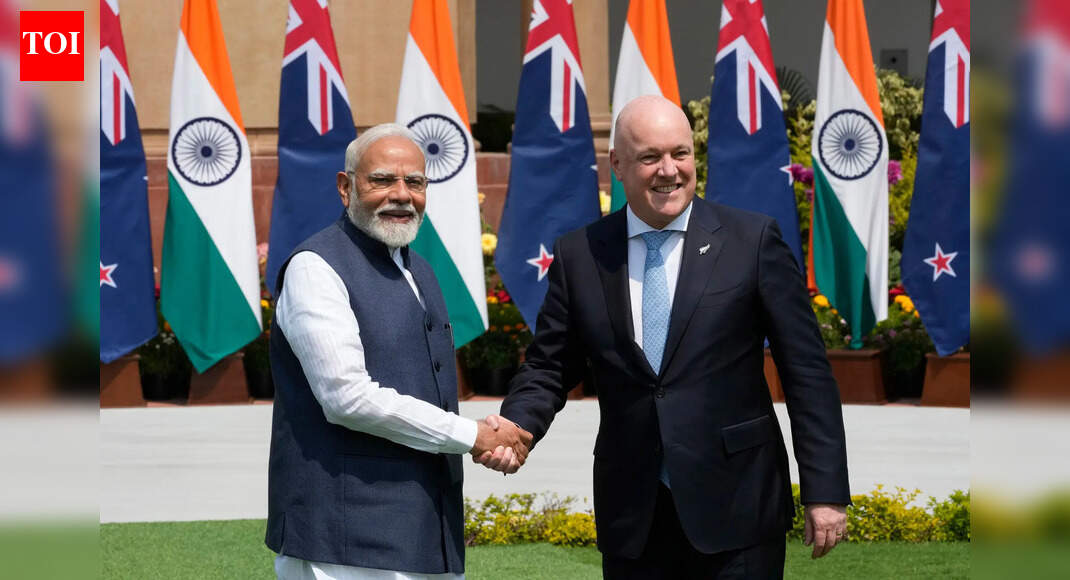
India and New Zealand struck a free trade agreement (FTA) on Monday, marking the end of negotiations that began back in March this year. The agreement was unveiled after a telephone conversation between PM Modi and New Zealand's PM Christopher Luxon. During the call, the two leaders described the India–New Zealand Free Trade Agreement as historic, ambitious and mutually beneficial, saying that it would act as a catalyst for deeper trade, investment, innovation and shared opportunities between the two countries. They also welcomed progress across other areas of bilateral cooperation, including defence, sports, education and people-to-people ties. Negotiations for the FTA were initiated during Luxon’s visit to India.
The leaders noted that the successful conclusion of the agreement within a record nine months reflected strong political will and a shared ambition to further strengthen bilateral ties.Hailing the deal, PM Modi said, "My friend PM Christopher Luxon and I had a very good conversation a short while ago following the conclusion of the landmark India-New Zealand Free Trade Agreement."
Luxon also took to X, saying, "I've just spoken with India's Prime Minister Narendra Modi following the conclusion of the NZ-India Free Trade Agreement ...
Boosting trade means more Kiwi jobs, higher wages and more opportunities for hard working New Zealanders. The agreement builds on the strong friendship between our two countries."
The PM further wrote, "India is one of the fastest-growing economies in the world, and this gives Kiwi businesses access to 1.4 billion Indian consumers. Our Government is relentlessly focused on fixing the basics and building the future - with new trade deals like this helping to grow our economy so all Kiwis can get ahead."
The FTA is expected to significantly deepen economic engagement, improve market access, boost investment flows and strengthen strategic cooperation, while opening up new opportunities for innovators, entrepreneurs, farmers, MSMEs, students and youth in both countries across multiple sectors.Both leaders are confident that bilateral trade could double over the next five years.
The two leaders agreed to remain in touch as the partnership enters a new phase following the signing of the agreement.