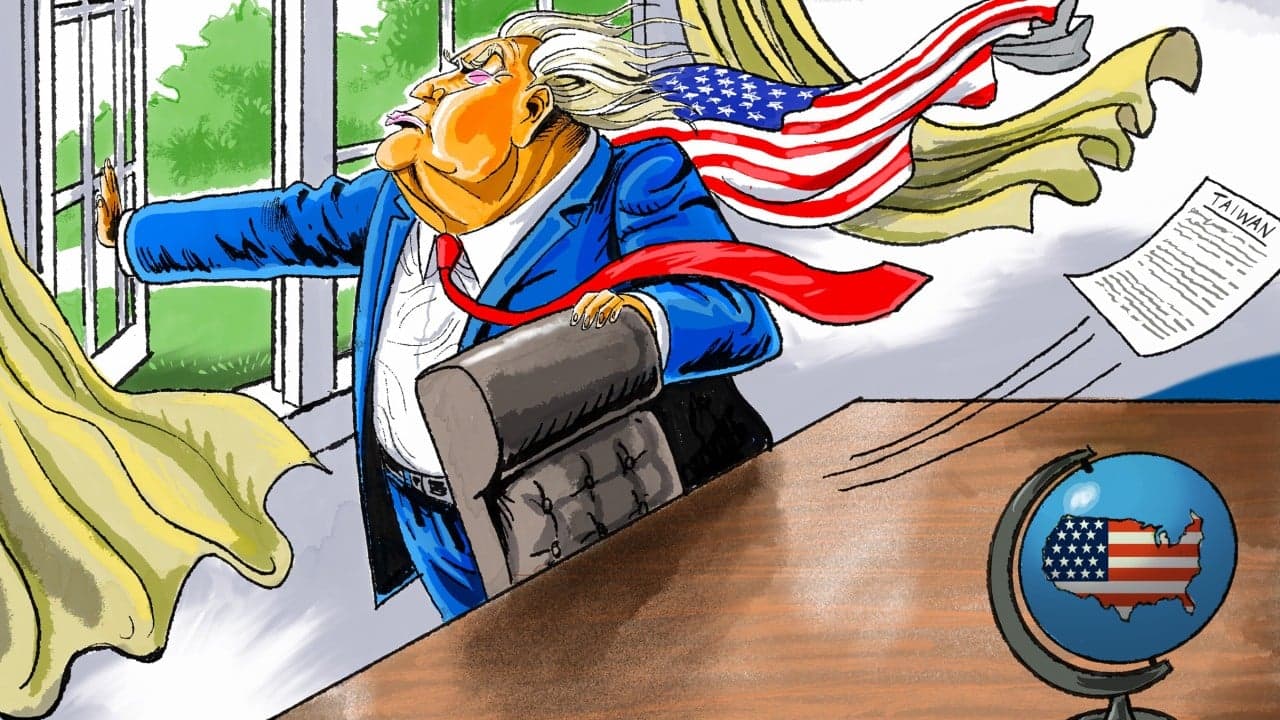
Beijing's Calculating Moves Amidst US Policy Shifts
As the Trump administration doubles down on its “America first” policies, the United States – a nation that has acted as a global security guarantor for decades – is strategically retreating from established international agreements and alliances. This shift has not gone unnoticed, particularly in Beijing, where leaders are keenly observing the evolving geopolitical landscape.
More crucially, Trump’s transactional approach to diplomacy has sparked considerable interest within China, especially among nationalist factions. These groups view the current environment as an opportune moment for Beijing to aggressively pursue its long-term goal of reunification with Taiwan, potentially reshaping the balance of power in the region.
Rising Tensions in the Taiwan Strait
The backdrop of shifting US policy provides critical context for understanding the ongoing tensions between China and Japan, which have been punctuated by high-level dialogues between the US and China. The strategic calculations of all parties involved are deeply intertwined with the future of Taiwan.
Speculation surrounding Beijing’s intentions toward Taiwan has intensified significantly since President Xi Jinping assumed power in late 2012. Xi has overseen an increase in Chinese military exercises in the sensitive Taiwan Strait and the contested South China Sea, signaling a more assertive stance.
Taiwan's Perspective and Escalating Drills
Tensions escalated further after William Lai Ching-te – a figure known for his pro-independence views – became Taiwan’s leader in 2024. His ascent to power prompted an increase in the frequency and scope of mainland Chinese military drills, further straining cross-strait relations and prompting international concern.
The exercises serve as a stark reminder of the potential for conflict in the region and highlight the complexities of the relationship between China, Taiwan, and the United States. The international community is watching closely, hoping for a peaceful resolution to this long-standing dispute.
The future stability of the region hinges on the careful navigation of these complex relationships and a commitment to diplomacy and peaceful dialogue. The decisions made by leaders in Washington, Beijing, and Taipei will have far-reaching consequences for global security and the future of cross-strait relations.

