For the past generation, Latin America has been a place of unstable stability. Marked on the surface by protests, political pendulum swings and spectacular scandals, most of the region has, since the democratisation of the 1980s and 1990s, remained firmly democratic and free of war between states. Though scarred by the violence of armed groups and increasingly powerful criminal organisations, it has, by and large, lived up to its self-assumed moniker of a “zone of peace”.
Which is why this year has felt so jarring. Throughout 2025, the first year of Donald Trump’s second term, analysts have obsessively parsed potential US military incursions into a hemisphere once defined by its unified defence of national sovereignty. But the fixation on whether Washington’s escalating pressure on Nicolás Maduro presages a physical military invasion of Venezuela has distracted from the real story: the larger shift towards direct intervention has already happened, and it has faced remarkably little resistance. More than 100 people have been killed in US maritime strikes that experts characterise as extrajudicial executions, and the loudest objections have come not from Latin American presidents or regional organisations, but from the US Congress.
Washington doesn’t need an invasion to upend the hemispheric order; Trump is already its new centre of gravity. He has redefined US power with an imperial restoration that no longer bothers with the “greater good” narratives Washington once used to justify its actions. The so-called Donroe doctrine operates openly as a disciplinary regime – transactional, punitive, unadorned – which is perfectly aligned with the hemisphere’s political shifts.
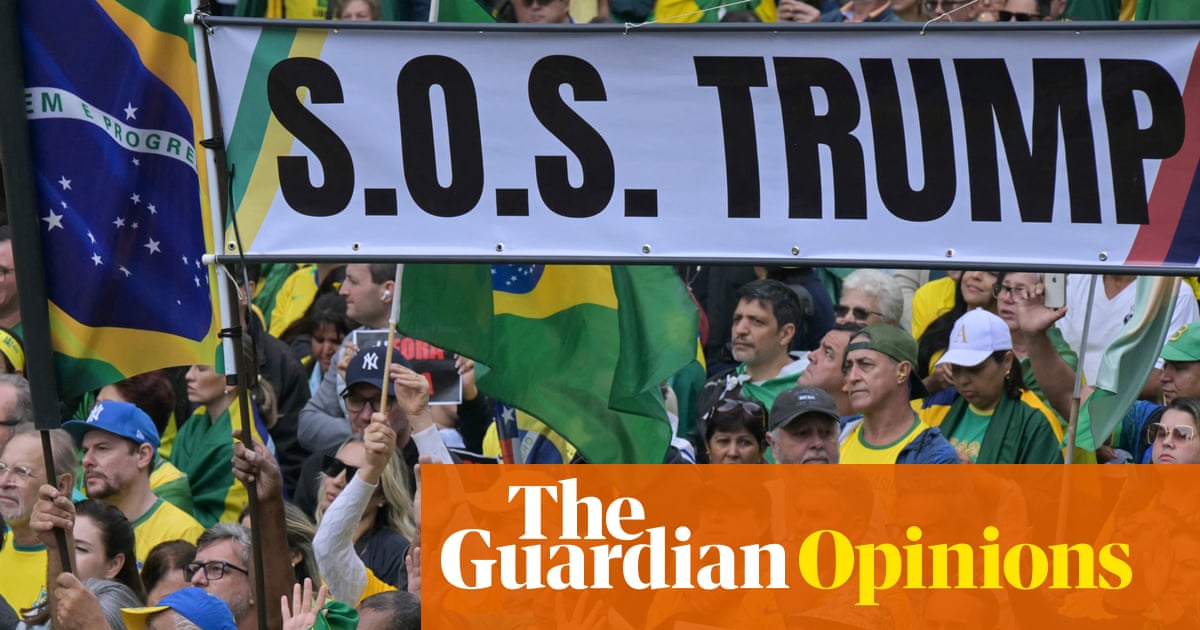
Trump’s influence is now so dominant that elections themselves are won or lost by him, or rather by his chosen candidates. In Honduras’s presidential contest, his endorsement of Nasry Asfura and threats to cut assistance if voters chose differently became central to the race, echoing his October meddling in Argentina’s midterms. Moves that once would have sparked uproar now pass as routine, save for a small circle of outraged experts.
This landscape is held together by a governing method that fuses volatility, exception and reward. Trump’s approach is more flexible, and more calculated, than the rhetoric suggests. The 28 lethal maritime strikes coexist with abrupt concessions, such as lifting tariffs on Brazil after it failed to sway the courts handling Jair Bolsonaro’s cases. Inconsistency is the strategy: it fractures coordination, generates dependency and forces governments into solitary, reactive decision-making.
One of the administration’s most powerful tools has been the expansion of exceptions, zones where ordinary rules no longer apply. Migrants were the first category, stripped of legal protections. Then came deportees dispatched to third countries through improvised agreements; alleged narco-traffickers killed in extraterritorial operations; and now Venezuela, where illegal maritime strikes target an internationally isolated regime. With few willing to defend Maduro, the muted response to dozens of deaths has effectively redrawn the limits of what norms Washington can violate without consequence. Every exception carves a new normal.
Under Trump, the region has developed a stark dichotomy: obedient allies and ideological enemies. Leaders such as Nayib Bukele of El Salvador, Javier Milei of Argentina and Daniel Noboa of Ecuador have aligned tightly with Washington and been rewarded with financing, security cooperation and diplomatic favour. Paraguay and Bolivia are angling to rapidly follow suit. Caribbean and Central American nations have bartered migration enforcement, military staging grounds or security concessions simply to stay in Washington’s good graces.
In this context, the most effective resistance to Trump’s policies has been national and diplomatic rather than regional. In fact, the only countries that have managed a partly successful pushback are Brazil and Mexico. Their leaders, Luiz Inácio Lula da Silva and Claudia Sheinbaum – ideological adversaries of Trump – practise a form of pragmatic resistance: no open rupture, but no alignment either.
After months of failing to bend Brazil’s judiciary in his efforts to free Bolsonaro, Trump was forced to sit down with Lula to negotiate, and has backtracked on tariffs and sanctions against a supreme court judge. Sheinbaum has cultivated the role of “Trump whisperer”: she pairs cooperation on migration and trade with symbolic gestures on drug policy and a firm discursive rejection of any interference in Mexican sovereignty, all while avoiding the ad-hominem attacks that shut down diplomatic channels. These functional strategies stand in sharp contrast to the sterile confrontation pursued by Colombia’s Gustavo Petro.
Petro illustrates the opposite dynamic. By confronting Trump head on, he exposed his government to punitive measures without altering Washington’s behaviour – a risky gambit aimed at shoring up domestic support but one that underscores a new regional axiom: loud resistance without collective backing is now a losing strategy. Trump has even singled out Colombia as a new potential front in his war against “narcoterrorism”, a malleable, disciplinary label that could be invoked to justify US military action on other countries’ territory across the region.
Meanwhile, the institutions that once scaffolded regional diplomacy have been hollowed out. Efforts to negotiate a transition in Venezuela have collapsed repeatedly, most recently after the 2024 elections, though Sheinbaum and Lula have recently offered to mediate. The Community of Latin American and Caribbean States (Celac) summit with the EU in November avoided condemning the US strikes. The Summit of the Americas, scheduled for this month, was cancelled altogether. Sheinbaum’s appeal for UN action last week had the air of a formality – the right thing to say in a moment of tension, but with little prospect of practical impact. If anything, it underscored how weak multilateral bodies have become in the current diplomatic climate.
The left, once the hemisphere’s moral counterweight to US power, has lost its bearings. The pink tide offered a shared language that fused nationalism, social inclusion and anti-imperialism into a coherent political project. Today that vocabulary is fractured; the political energy that sustained it has evaporated at both national and regional levels. Trumpist foreign policy has a similar tone to the far right’s winning message in the region’s national politics. It feeds on disillusionment with corruption, insecurity and institutional stagnation, offering a repertoire – order, authority, action – that feels more plausible to large sectors of society than calls for inclusion or solidarity.
The contrast with 20 years ago is striking. In 2005, pink tide governments, electorally strong and ideologically confident, gathered in Mar del Plata in Argentina to defeat George W Bush’s Free Trade of the Americas Agreement. Anti-imperialism once formed the common political grammar of the Latin American left. That consensus has evaporated. In a recent Bloomberg/Atlas poll, 53% of Latin American respondents said they would support US military intervention to remove Maduro. It is only one data point, but it captures a broader transformation: the region no longer believes in the collective narrative that once constrained Washington.
Trump’s revived imperial posture is succeeding not only because of US coercive power, but because Latin America’s left no longer persuades. His influence draws as much from the left’s ideological exhaustion as from Washington’s strength. The region’s politics has drifted in ways that both accompany Trump’s advance and open space for it – and he has been quick to consolidate that new terrain.